Monthly Archives: February 2013

Brought to You by the Internet

I am a product of my generation.  I do, in fact, live on the internet.  Today I am going to share some of that internet with you.

First, for those of you who have faced the Rejection Amoeba and lost, or are going to do that sometime in the future, I thought I’d link you to this Cracked article.  It’s all about famous books that got rejected for really inane reasons.  If you need a pick-me-up, something to keep you going in this sea of NO, I suggest you take a look at it.

Second, I have a video for you.  There is a channel on YouTube that does Honest Movie Trailers.  I will warn you now that if you start watching these, you may find hours of your life slipping away.  Fortunately there aren’t too many.  And I’m sharing one here for you now.  It’s Twilight.  And it’s perfect.  Enjoy.

I don’t really have anything else to share right now.

Here’s an update on how Hellbound is doing – a lot of editors are reading it.  I may hear back from one or two of them someday.  Probably.  I hope.

That’s it.

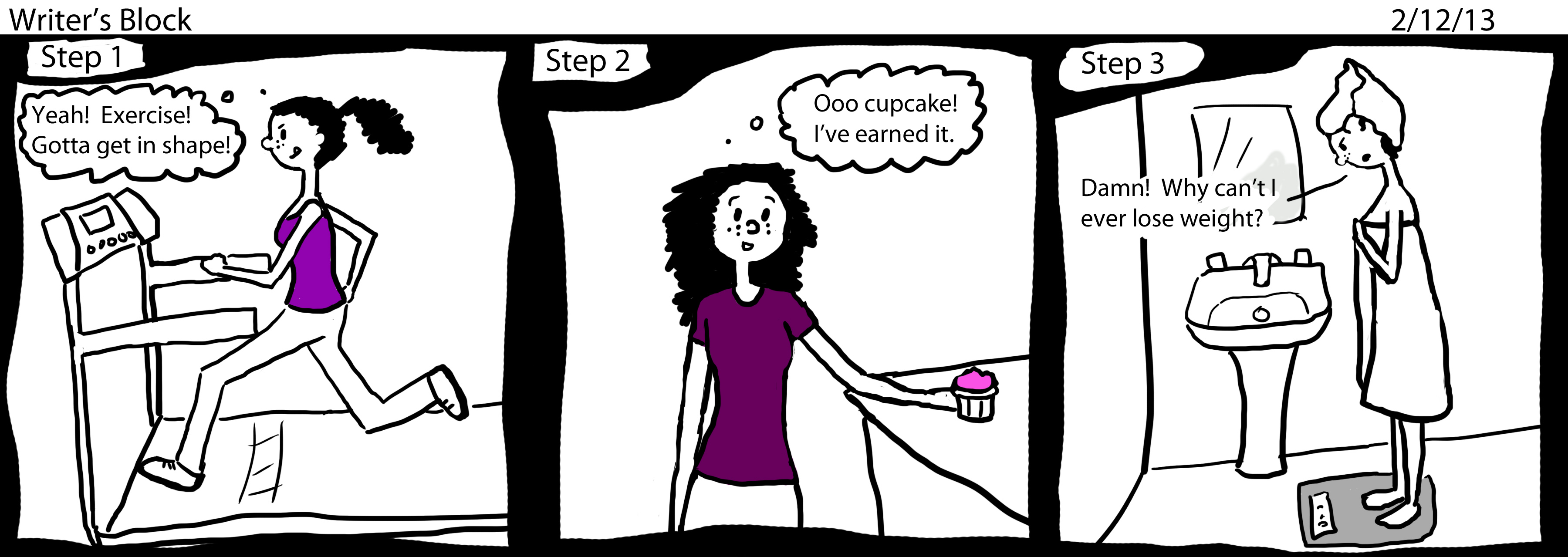
Writer's Block Strip 18

Word of the Day: Abstinence (n) – any self-restraint, self-denial, or forbearance

Leave a comment

Filed under books, Comic, Humor, writing

Beautiful Words

Did you know there is a website that compliments you?  It’s true.  Look:

Emergency Compliment

Click the image to go to the site and get yourself some free compliments.

Now on to the real reason I started a new blog post.

What makes words beautiful?

I just finished reading a book from the 1960s called Linsey Herself, by Ruth Wolff.  My mom told me I should read it.  She said the writing was very sophisticated and that she rarely encounters anything like it in this day and age.  After just a few chapters, I was able to see what she meant.  The narration has a very nostalgic feel to it, and the narrator – a teenage girl – has a very plain way of telling her story.  I don’t mean “plain” as in “boring,” because the writing is certainly not boring, but “plain” as in “she tells it like it is.”

Reading this book, I realized that the writing is quite beautiful.  This got me to thinking about what exactly makes words – ordinary, everyday words – into art.  What makes them beautiful?  Is it a way of arranging them?  Is it choosing prettier words over the homelier ones?  Take, for example, a list of plain ol’ words:

strong

tight

circle

family

close (as in the opposite of “far,” not “to close a door.”)

love

Is there anything special about these words?  Not necessarily.  We may associate certain things with them.  “Love” is certainly a weighty one.  But on their own they are no more or less beautiful than any other assemblage of letters.  Now take a quote from the first page of Linsey Herself:

It is a strong, tight, circle, our family, stitched close as needlepoint, Mama’s thread being love. – Linsey Herself, page 5

That sentence uses all the words in the above list, and yet it has a certain quality to it that the words themselves lack.  And so I must come to the conclusion that it is at least in part about the arrangement.  You must treat words like flowers, and arrange them in a way that is most pleasing to the eye.  But then you encounter another problem.  One I’ve talked about before.  Something I call “forced profundity.”

If you sit down with the intent of being profound, of creating beautiful words, then it is my belief that your intent will show through.  The words might come out beautiful, but it will seem forced.  This is a problem, because we can’t all just wait until the exact right moment strikes us for the spontaneous production of pretty writing.  Sometimes you need to be able to control when you produce something beautiful.  But don’t worry, because if painters can do it, so can you.

Art is about practice.  You can learn how to paint a beautiful flower, sculpt a beautiful woman (or man), play beautiful music, etc.  So you can learn to write beautifully.

Flower

But I think part of that learning is learning to let go.  When you let the words flow through you, go with what your instinct tells you to put down, take your brain out of it, then you’ve got something.  Or you’ve got a never-ending stream of consciousness that makes sense to no one but yourself (see this blog).  I didn’t say it’d be easy.  And thankfully there is such a thing as going back later and editing.

I’ll end with a list of some of my favorite words, which are beautiful to me on their own.  Some might even have been Words of the Day.

Copious

Apoplectic

Supercilious

Ebullient

Effervescent

Abscond (for you, Micah)

What is your favorite word?  Tell me in the comments section!
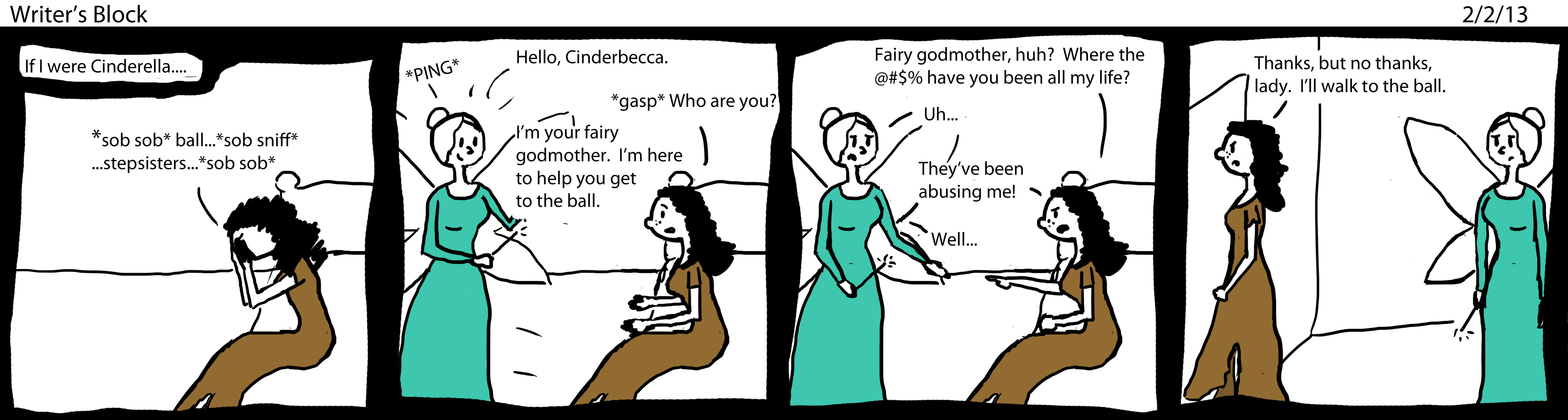
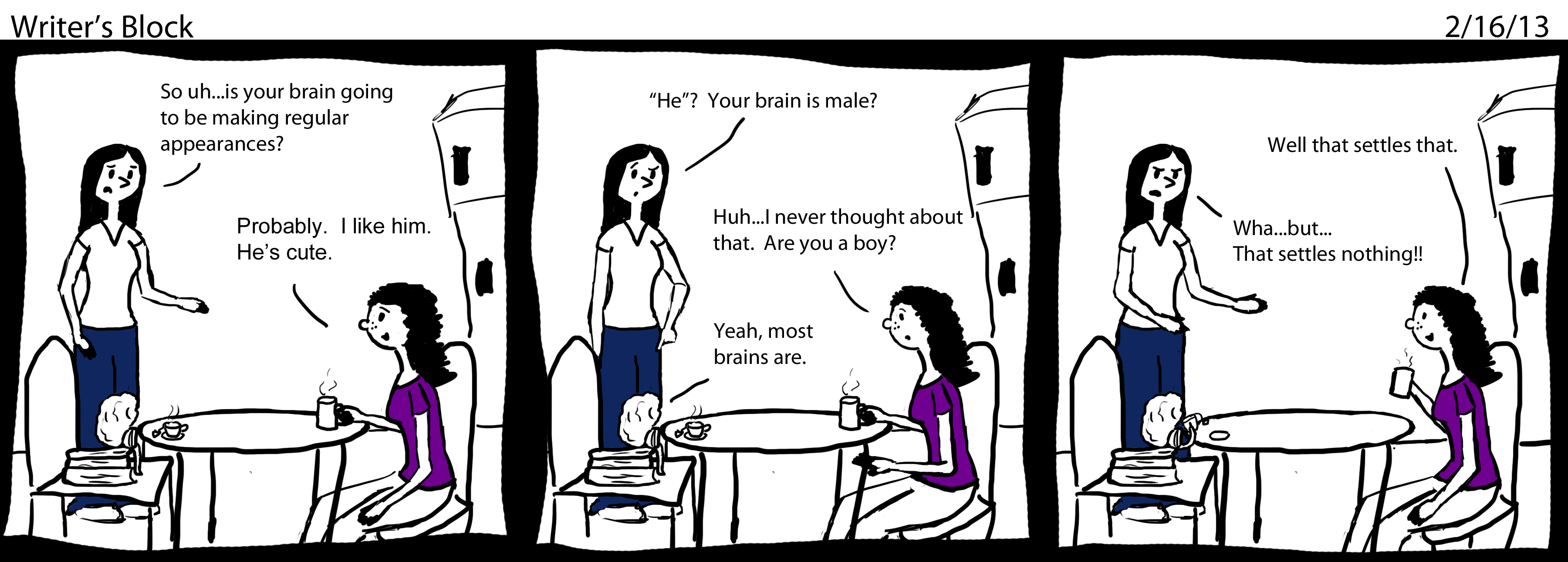
Writer's Block Strip 17

Word of the Day: Ebullient (adj) – overflowing with fervor, enthusiasm, or excitement; high-spirited

7 Comments

Filed under books, Comic, Humor, writing

Immortality

I’ve been thinking a lot about immortality lately.  Not that I’d like to be immortal; that would be terrible.  But a lot of characters in books are immortal, and that poses more problems than you’d think.

For one thing, you have to define the limits of their immortality.  I know that sounds oxymoronic – limited immortality – but think about it: A character who is untouchable, like Superman without a weakness to green rocks, has little motivation to be careful and think things through.  He or she does not care at all about going blindly into any situation.  And why should they?  They can’t be harmed.  But that makes it a little difficult to create any amount of suspense around that character.  You know he or she is going to be fine no matter what.

Another thing is that an untouchable protagonist makes for a character that your readers can’t really relate to.  When was the last time you looked at Superman and thought, “I know exactly how he feels.  I hate it when entire buildings fall on me.  It really messes up my hair”?

Messed Up Hair

No worries, though, because your character can still have very human flaws that make him or her more empathetic.  That’s not what I want to talk about though.  What I want to talk about, as I said, is the possible limits of immortality.

For example: Have you thought about what would happen to an immortal if their head was cut off?  If they were chopped up into teeny tiny pieces?  Incinerated?  Dissolved in acid?  Do those things just not touch them?  Do they bleed when they’re cut?  Or can they simply not be cut?

Severed-Head

These are all things that must be established.  The reason I’m talking about this is I have several characters in Hellbound who are some form of “immortal.”  My protagonist is, for one.  As are the protagonist’s father and uncle.  But all the immortal characters do have weaknesses.  They can be killed in certain situations.  It’s just tricky, because most things can’t kill them.  So how do you create a sense of urgency?  Suspense?  When the reader knows that a character is untouchable, it is hard to do these things.

Fortunately, as the author, you control the world you create.  You can make exceptions to the rule, create an opponent who has the ability to harm immortals, define the parameters of your character’s immortality.  It is all your doing.  But you do have to think about those things.  It is not enough to say “He is immortal.”  You must say, “He is immortal, in that he will live forever, provided that no one ever attacks him with a man-made weapon and cuts his head off which will cause him to die.  Other weapons, like guns, have no effect on him because they are made by machines.”  And the explanations could go on and on.

That’s all I have to say really.  Just wanted to point out to you that immortality is complicated.

Have a comic:

Writer's Block Strip 16

Word of the Day: Parameter (n) – a limit or boundary; guideline.

Leave a comment

Filed under books, Comic, Humor, writing