Tag Archives: author

Phone Booths! (Telephone Boxes?)

Hello!

Did I complete my phone booths, you ask?  Oh, yes, I did, thus undoing some of the damage from that incredibly stupid thing I did.  Did I permanently damage my back hunching over my computer as I painstakingly added minute details?  Oh, yes…probably.  I’m going to give you the full series at the bottom of this post, including the ones I posted a while back, (it’ll look long, but they’re only pictures, so they go by quickly) but first, two things.

1. A quick segment on how advertisers use wording to make you think they’re offering you something special.

I’m sure you’ve all seen some cheese-based product or another that advertises:

Cheez-Its

Kraft Mac ‘n’ Cheese does it, too.  As do a number of other products.  I’m pretty sure many of you have also eaten these products, and questioned the veracity of these advertised statements.  I know I have.  But all I want to point out is that these products have “Cheese” in the name (usually).  At least in one form or another, right?  (I suppose “cheez” has been accepted into the English lexicon)  So why should they have to advertise to us that their cheese product is made with cheese?  Shouldn’t we be able to take that for granted?  It just bothers me that, not only do we not already expect cheese products to be made of cheese, but that they sell us this stuff by advertising that the products are made with “real cheese” as if this is an added bonus.  Am I making sense?  It’s like if you grabbed a loaf of bread and it advertised that it’s made with Real Flour!  Shouldn’t that be a given?  I was just about to type that this is “food for thought,” but…puns.  Um…this is just something to think about.  No metaphor there, but you get the message.  I’m only pointing it out to make you think a bit.

#2.  I’ve come across another book I couldn’t finish.

That’s not entirely true – I could finish it, but the sad truth is I really don’t want to.  It didn’t give me any reason to.  I found I honestly don’t care what happens to the characters.  The book is called Shiver, by Maggie Stiefvater.  It’s a werewolf book.  I have a thing for werewolf books.  Way back when I was listing my favorite authors and why I love them, I never got around to Patricia Briggs.  She writes my favorite werewolf series.  She’s a great author, she covers really weighty topics in her books, and her main character – Mercedes Thompson – can turn into a coyote at will.  She’s the only non-werewolf in a pack of werewolves, which helps to drive the plot.  Oo, that’s an interesting word: Plot.  You know what I found I was missing in Shiver?  Plot.  That’s not to say there isn’t one – there is.  And it’s well established.  But toward the middle of the book, I felt I only got snippets of plot that were surrounded with too much Love Story (in my opinion), and it honestly bored me.  I got that these characters were in love.  At some point it just felt like I was being beaten over the head with it.  So I decided to stop reading.  Because 208 pages into the 390 page book…well, I’m still not quite sure what’s actually going to be happening.  Not in a mysterious way.  More in a…the plot is taking a backseat to the lovers’ story kind of way.  So…I’m not interested.  There’s very little action.  I like action.  Just my preference.  I’m sure some other people are way into this series (Yes, of course it’s a series), but for me, it’s not happening.  The book is going into the donation pile.

That’s it!  I know, I didn’t do any cartoons today.  Perhaps the phone booths will make up for it.

Word of the Day: Veracity (n) – conformity to truth or fact; accuracy.

#1 – On the Street
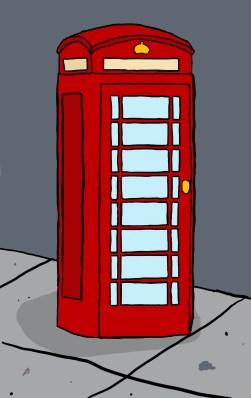


#2 – Night Sky
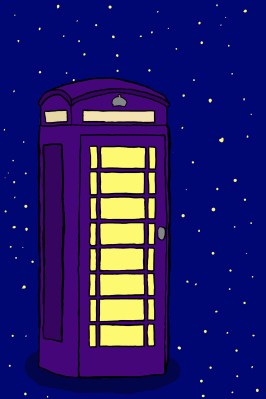


#3 – In the Forest
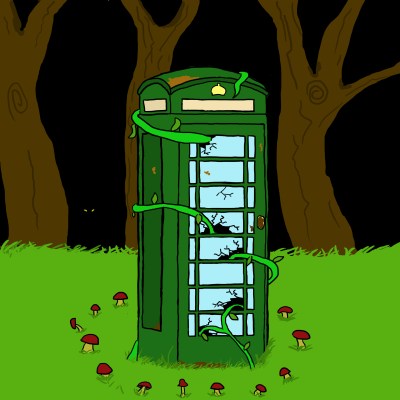


#4 – Parchment
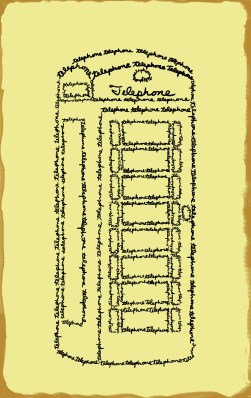


# 5 – Men at Work
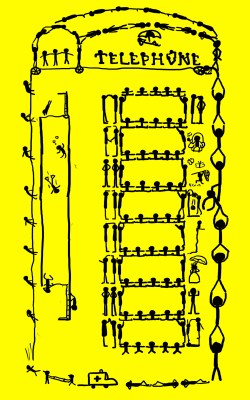


#6 – Crumpled



#7 – Long Distance Call
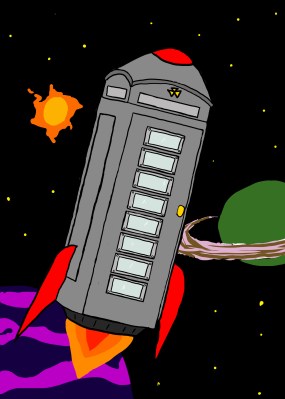


#8 – Primary Colors
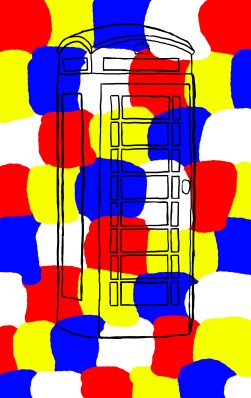


#9 – Out of Outline
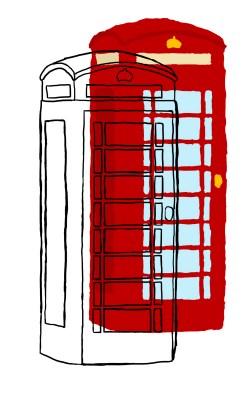


#10 – Waterlogged



#11 – Optical Illusion
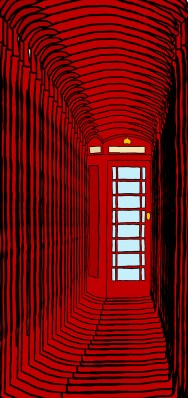


#12 – Collective



#13 – Under the Sea



#14 – On the Beach



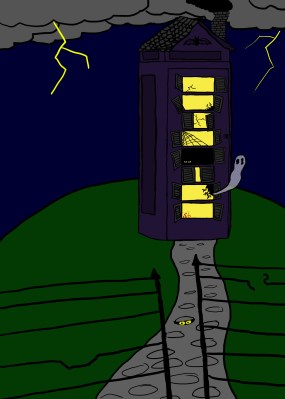
#15 – Haunted
2 Comments

Filed under books, Humor, writing

Some Things to Keep in Mind BEFORE Querying an Agent (Part 3)

We’ve come to the end of a long journey, my friends.  Thank you for sticking with me this far.  I’ve got some last points to make, and then I’ll let you be on your merry way.  So let’s get to it!  The finale!

#8 – When we tell you we’re swamped – we mean it!

This is basically a reiteration of what I said in my previous post, but with more focus on the rejection letters you will inevitably receive.  Most rejection letters will include an apology that goes something like, “While your book is no doubt wonderful, we have decided to pass as this time.  Please understand that we receive a great deal of submissions each day, yadda yadda.”  Just wanted to let you know…we mean it when we say that.  When we reject you, it really doesn’t mean that your book is bad and that you should stop trying.  That being said, there are some things you should keep in mind…

#9 – Do YOU like your book?

How do I say this?  Of course you have to like your book if you believe in it enough to send it out to agents, but…have you read similar titles?  Have you compared your book to other books you like and seen if it holds up to the already published books’ high standards?  They say you are your own worst critic.  I think that’s good.  It’s when you’re your own biggest fan that you run into trouble.  If you’re unable to cast a critical eye on your own work, play devil’s advocate and anticipate the criticisms that agents are going to give, then your book probably isn’t quite ready to be unleashed on the world.

When I talked about doing your research in my last post, and having other people read your work, I really, really meant it.  Because we are busy, and we don’t want to have our time wasted by the first 100 pages of literary nonsense that fell out of your brain.  It’s harsh, but it’s true.  A lot of people think agents are there to do your critiquing and revising for you, but that’s just not right.  We can’t take on a book unless it’s as close to finished as it can possibly get without the help of a professional editor.  Our jobs are on the line if your book doesn’t sell, so we can’t take on a project that only has the potential for being good.  Because there’s no guarantee that the author will be receptive to our criticism, and, even if they are, they still might not be able to make the changes we want to see.

And finally…

#10 – How is your book different from the hundreds of thousands that are already out there?

When agents like a book, they have to go through the same process that authors do – querying.  Only agents query the publishers, and the publishers aren’t keen on taking on every project that gets sent their way.  So we have to know why this book is unique and different and guaranteed to sell a million copies.  Which means you have to know all that, and you have to tell us!  When you do your research and find other similar titles, you have to tell us that you’ve looked at them, and that yours is different because it has/does/includes____________________, which none of those other books have done.  Now, this doesn’t necessarily have to be included in the query, though it wouldn’t hurt, but you should be prepared to answer those questions in case they’re asked.  Especially if you know that your book is really, really similar to, say, the Sherlock Holmes series.  We’re going to want to know how you’re different from a Sir Arthur Conan Doyle wannabe, and you’d better be prepared with a better answer than, “My book takes place in present day.”

That’s it!  We’re done!  Hooray!  I hope I was somewhat helpful.

Word of the Day: Finale (n) – The last piece, division, or movement of a concert, opera, or composition.

1 Comment

Filed under books, Humor, writing

Some Things to Keep in Mind BEFORE Querying an Agent (Part 1)

Working at a literary agency has really given me some new perspective on how dense authors can be (myself included).  While I am in no position to share any specific examples to back up what I am about to say, for the sake of the authors’ privacy, I believe I have learned quite a few things that can help aspiring authors (and screenwriters I suppose) to present the best possible query.  The result will be this blog post, and probably one other, if not more.  It depends how well I stem my urge to ramble.  Spoiler alert: I probably won’t do so well.  I’m already failing, and I haven’t even started yet.  So…without further ado, we begin the list!

#1 – Your book is not your baby!

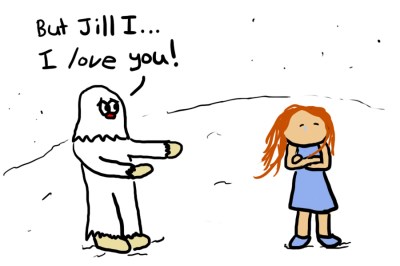
This bit of advice is something that will help you not only in the querying stage, but also beyond that, when editors start to take a look at your work.  The fact of the matter is, if you want your book to get published (or your screenplay to be taken seriously), you are going to have to accept the fact that many people are going to read it, and they are all going to have their own opinions.  Those opinions will largely affect how your finished book looks when it’s finally there, in all its hard-covered glory, on the shelves in the store.  And if you want to see that happen, you have to remember that these people’s opinions aren’t things to be taken lightly or ignored – these people are professionals.  They know what they’re doing, and – just in case you don’t believe me yet – their paycheck also depends on your book being bought by more than two people who only bought it by accident because their grandmother recommended The Setting Sun and your book is titled The Setting Son.  So you better believe they’re going to do their damndest to make it the best, most marketable thing out there.  Hence Twilight.  And if you’re sitting there kvetching and whining, saying things like, “But I can’t change that part!  Jill’s encounter with the Yeti is a crucial subplot that plays a vital role in the development of the Yeti’s character!”  then say goodbye to that book deal, and the shelf space at the Barnes & Noble.

In conclusion, yes, it’s your book.  You created it.  But don’t be like the one guy who queried us and then, upon receiving a request for the first fifty pages of his manuscript, sent in the entire self-published book because he “couldn’t bear to cut up his work.”  That there is a warning sign right off the bat.

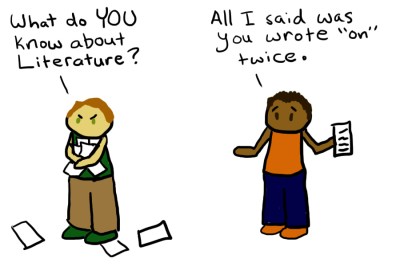
#2 – Proofread your query letter and your manuscript before submitting them.  This includes having someone else read them.  Someone who doesn’t fear incurring your wrath should they offer a suggestion for revision.

This one seems like it should be obvious.  It isn’t, apparently.  I have had people write in with missing punctuation and misspelled words and proper nouns.  Even my boss’ name has been misspelled a couple times, and you’d think that’d be the one thing people would make sure to get right.  Nope.  Proofread your work, people.  Then have someone else read it.  Someone who knows what they’re talking about would be best.  And, just a side note, if they start laughing from reading your query – and it’s not supposed to be funny – maybe go back to the drawing board.  I have to admit that I have encountered quite a few queries that – for one reason or another – have brought a chuckle out of me.  Either because the writing is poor, the plot is shaky, or the grammatical errors are so egregious.  So really, really look at your query and your manuscript before submitting it, and if someone else reads it and offers you their thoughts, don’t get defensive.  They could be on to something.

Which leads me to…

#3 – Learn to take constructive criticism 

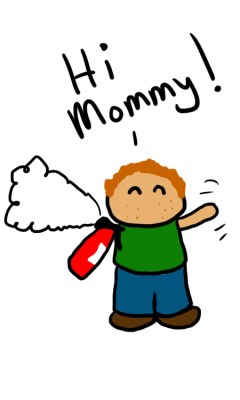
I won’t spend too long on this, because I pretty much already said what I need to say for this in item #1.  If someone gives you a suggestion for how to revise, or how something might be improved, don’t get haughty.  If it’s good advice, take it.  Sure, that’s up to your discretion, but also take into account whom you receive the advice from.   As I said above, literary agents and editors want your work to sell just as much as you do, so if they send you back some form of a critique, pay attention to it.  Even if it hurts your pride.  Because, again, your book is not your baby.  If someone tells you your son can be improved by removing his right arm and replacing it with a fire extinguisher, feel free to ignore them.  If someone tells you that your main character seems a little one-dimensional, roll with it.  Maybe they have a point, and you should try to fix it.

That’s all for today!  Tune in next time for more  of my expert advice!

Word of the Day: Haughty (adj) – disdainfully proud; snobbish; scornfully arrogant; supercilious

And, for your edification (and mine, since I didn’t know this): Supercilious (adj) – haughtily disdainful or contemptuous, as a person or facial expression.

Oh all right, this one too: Egregious (adj) – extraordinary in some bad way; glaring; flagrant

5 Comments

Filed under books, Grammar, Humor, writing