
I thought I’d ring in the new year with a divergence from my usual talk about books. I’m going to do a movie review, even though this movie has been out for forever and this review is way late. But the Oscars are coming up, so maybe it’ll be pertinent in a couple months. First…
[SPOILER ALERT]
We’re going to talk about Brave. If for any reason you do not want any part of Brave spoiled for you, you’d best stop reading now. It’s okay, I’ll forgive you.
So the reason I wanted to talk about Brave is that everybody went all crazy about this one issue: It was Pixar’s first female protagonist. Pixar’s first female protagonist had the most cliche plot that can be given to a female protagonist – Action Princess No Want Marry.
Here’s the issue I took with it: It didn’t even do that. Seriously. I went into this movie going “It may be cliche but by the power of Grayskull I don’t care. It’ll be pretty. I mean, just look at the trailers! So much pretty scenery! And a horse! I love horsies!” That may not be a direct quote. I don’t remember the exact words I thought as I seated myself in the theater, but that pretty much sums it up.
So here’s the problem: You know all of the pretty scenery and adventurey stuff they showed the little Scottish princess seeing and doing, respectively, in the trailer? You know…The horseback riding along a seaside cliff and climbing to the top of a rock and dancing on it with a huge waterfall in the background? Go watch the trailer on YouTube if you don’t know what I’m talking about. I’ll wait. Ok…seen it? Right. All that stuff? First five minutes of the movie.
The rest of the movie? Bears. Not kidding. See the whole big deal is that Merida, the princess, has a bad relationship with her mother. So one day, while riding through one of the three or four sets that are recycled again and again all throughout the movie, she finds a witch’s cottage. She asks the witch for a way to change her mother, and the witch gives her a spell that turns her mother into a bear. A freaking bear, people. The rest of the movie is bear shenanigans. They sneak out of the castle because Merida’s father is all about killing bears, and Merida is afraid he will kill his wife in bear-form, and then they go to a cave and Merida’s mother tries to use sticks to properly cut up her food and eat like a lady and Merida teaches her how to be a proper bear. Not joking. She teaches her how to go into a river and catch fish in her mouth. Through this, her mother realizes that her daughter learned a great deal of useful things all those times she roughed it in the woods or whatever. Then they have a big showdown with the villain – a different bear. God I wish I were making this up. He was a prince once, and he met the same witch Merida did, who apparently only knows how to make things that aren’t bears into bears. The end battle? A big bear showdown. Wanna know how useful Merida’s archery skills were in this showdown? I’ll give you a guess. That’s right not at all useful. Remember what I said about Chekhov’s gun? Merida’s bow and arrows were the gun. They were useless. She shot some arrows sure, and they hit the bear bad guy, but they had less than any effect. They might as well have been fighting a honey badger for all that the villain didn’t care about her puny arrows.
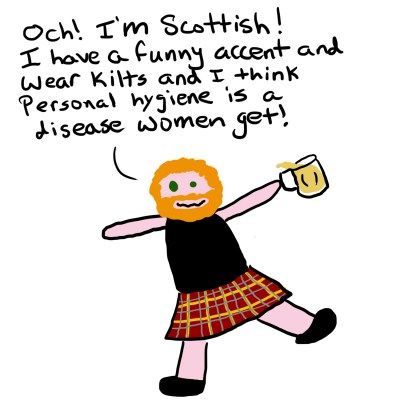
So everyone was all up in arms about an action princess being Pixar’s first female main character, and it wasn’t even that. She didn’t have some great big adventure. She barely strayed five miles (kilometers?) from her castle. And there was a lot of making fun of Scottish people. A lot.
The one thing I liked about that movie was their version of a Will-o’-the-Wisp. The Wisps were these creepy little blue ghost things that Merida saw at plot-convenient times, and her mother encouraged her to follow them because they’d “lead her to her destiny.” Only thing is they looked more like they were leading her to her death…wait…isn’t that actually what they do? Yeah, turns out Will-o’-the-Wisps are little lights that lead travelers off the safe paths they’re on. Nothing to do with destiny there. Unless it’s your destiny to die after being stupid enough to follow some creepy little ghost lights off of the trail you’re on and into the great unknown.
So Brave was a disappointment. It really was. It was like Pixar couldn’t even be bothered to try coming up with a viable plot for a girl. This is what I imagine the brainstorming meeting went like:
“She’s going to have an arranged marriage to some kilt-wearing imbecile, but she doesn’t want to get married. So she beats all her imbecilic suitors in an archery contest and that’s the first fifteen minutes of the movie. Then what?”
“Uhhhh….bears?”
“Great job, Frank. We should smoke weed in our meetings more often. Let’s go get some pizza. We’ll leave the interns to write the rest of the script.”
TL;DR?
Brave = Tremendous Disappointment. Full of Bears.
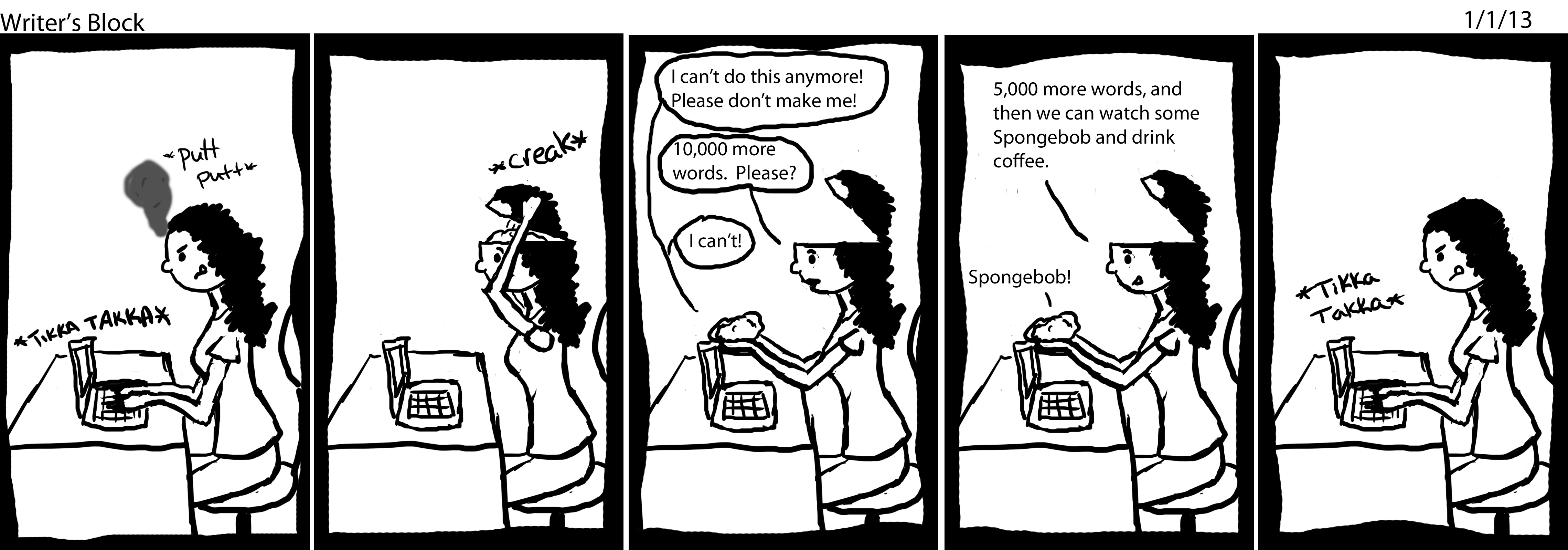
Have a comic (click to enlarge):
Word of the Day: Will-o’-the-Wisp (n) – anything that deludes or misleads by luring on.

 Potato Lady Blogs