Tag Archives: web comic

Sexism

Let’s talk about sexism, shall we?  Instead of cartoons today, I’m going to use commercials to illustrate my points.

As many people know, a lot of sexism is directed at women.  So much so, in fact, that when the idea of applying it to men even occurs, people tend to call it “reverse sexism.”  Which is not a real thing, but they’ve forgotten that “sexism” applies to any kind of negative, prejudicial treatment based on one’s sex.  And the term “sex” in this case refers to Male and Female.  (Note that “sex” is different from “gender.”  I can’t even write a blog post on the treatment of people of different genders because my brain will explode from all the emotions running through me.)

Now I can’t blame people for thinking “sexism” only applies to women.  After all, women were the ones who had to fight for the right to vote.  And women are the ones who are constantly characterized as the “mothers” in commercials who clean up after their kids, pets, and doofy husbands.  (Instead of referring you to one specific commercial, I’d like to refer you to Sarah Haskins, who once did a fantastically amusing segment called Target Women)

I would seriously recommend watching all of Target Women, since it’s a pretty amazing show.

But what I wanted to talk about today was not sexism towards Females.  I want to talk about sexism towards Males, because apparently there isn’t enough talk about that.  For starters, the above “Doofy Husbands” sketch is pretty good.  It shows sexism toward men and women alike.  But even that isn’t as bad as these (Please watch, no matter how painful):

Going backwards, I want to address Carl’s Jr. first.  (Known in some states as Hardee’s, for some reason)

Carl’s Jr. capitalizes on the phrase “There is no such thing as bad publicity.”  Carl’s Jr. insults both men and women equally, as can be seen in this commercial.  (The woman is characterized as the good cook, implying she would be cooking FOR her doofy boyfriend, as well as someone who likes “furry toilet seat covers” because…ew)  Yet somehow they still have customers.  But, again, I don’t want to talk about the sexism towards the “girlfriend” in this commercial.  I want to talk about “Without us, some guys would starve.”  Now, to be fair, it says “some guys” and not “all guys.”  Big whoop.  Carl’s Jr. is constantly portraying men as useless oafs who can’t do “feminine” things like cook (or even crack an egg!) and who need to prove their masculinity by eating huge, greasy, drippy things on buns.

Then there’s the new Dr. Pepper.  Where to start?

I talked earlier about the impossible, insulting standards the fashion industry sets for women.  But what about the standards set for men?  Men are constantly being challenged to prove their “manliness.”  In Carl’s Jr. commercials, as well as soda commercials, and numerous other ads.  Naturally diet soda was for women, so Dr. Pepper decided to come right out and say “Look men, this is who you should be!  Rugged, outdoorsy, manly.  This is how we relate to you.  With an unclean, ridiculous-looking stereotype that is somehow supposed to appeal to your inner man and make you drink diet soda which tastes no manlier than any other soda.”  (I haven’t tried it, but it isn’t hard to guess).

What is manly?  We’ve already discovered what ads think “womanly” is.  Despite the leaps and bounds women have made in the fight for equality, we are still portrayed as the wives and mothers who clean and do laundry and smile at the antics of their families.  And men?  Men don’t get it any better.  “Be manly” the ads say.  “Have a wife and children, never cry, eat tree bark, love meat, have muscles in places where there shouldn’t even be muscles.  And if you don’t do that, well you’re just not a man, are you?”  This is ridiculous.  Every time a commercial, or anyone really, challenges a man to be “manly,” they are being sexist.  Plain and simple.  Any time someone challenges a person or group to conform, it is deplorable.  Frankly, advertising companies should be ashamed.  But they’re not, because they have money.  I just think ads are a good litmus test for how far humanity really has progressed.  The day we stop seeing ads like those featured above is the day that maybe we have finally taken a step forward.  Oh and I’ll leave you with this one, just in case you weren’t angry enough at Dr. Pepper:

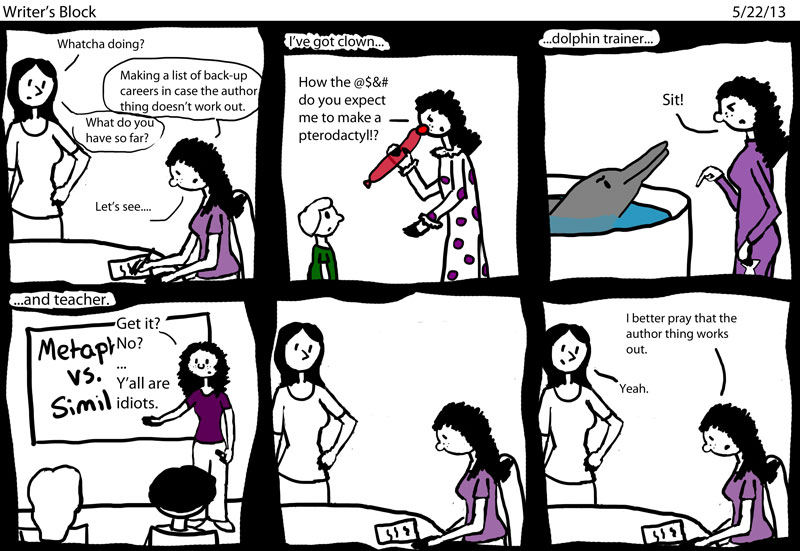
Have a comic!
Writer's-Block-Strip-29

Word of the Day: Deplorable (adj) – 1. Causing or being a subject for grief or regret; lamentable.    2. Causing or being a subject for censure, reproach, or disapproval; wretched; very bad.
Leave a comment

Filed under Comic, Humor

Character Squiggle

As you may know, I occasionally like to go back through my blog to freshen up on the topics I’ve covered and keep an eye out for typos.  Sometimes when I do this I realize I was an absolute nut job when I first started this blog, and I find myself issuing apologies to make up for it.

Yes, I still feel awful about the juvenile writing and “advice” that I dished out in my first few posts.  But at least one good thing came out of it: I thought up a new post.  I’m going to revisit a topic I already “covered” way back when.  Even though I already sort of revisited that post already. 

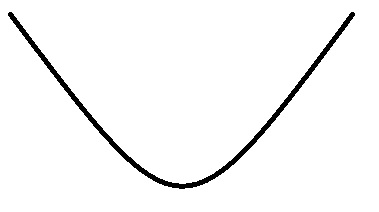
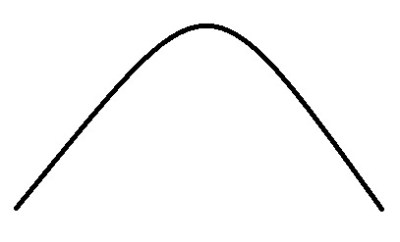
The topic is character development.  Or rather, the character arc.  See, when I think of an arc, this is what I imagine:

arc

But character arcs aren’t that simple, because characters aren’t simple.  That got me to thinking about the different forms or “shapes” that character arcs can take that regular arcs won’t.  They can look like this:

Upside Down Arc

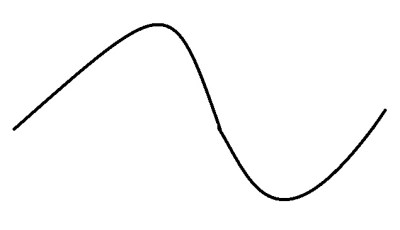
Or even this:

Squiggle Arc

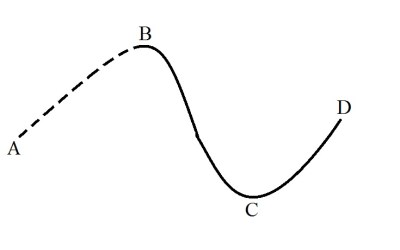
This isn’t an arc in the traditional, mathematical sense, but it can be one in the literary sense.  I shall show you what I mean, because that is what I do.  First I’m going to put some letters on it…

Squiggle Arc Labeled

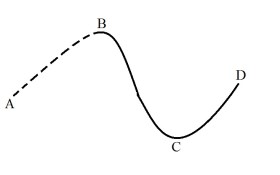
Ok, so Point A is on a dotted line, which represents the part of the story that is not included in the book.  Instead, points A to B represent the character’s backstory that is intermittently revealed throughout the book.  This backstory represents a low point that climbs to a high.  So say our character is a rich CEO.  Points A to B would represent the part of his life when he started out in the mailroom and clawed his way to the top.  The book doesn’t start with him in the mailroom, but we get glimpses of that part of his life from time to time in the narration.

Moving on to Point B.  That’s where the story starts.  Rich McBoss is a CEO with swimming pools full of money.  He’s happy, he’s got a trophy wife and two spoiled kids, and he has about a thousand underlings at his beck and call.

Squiggle Arc Labeled

From points B to C, we get a good part of the plot.  Everything that goes up must come down, and our rich CEO finds his life spiraling out of control.  He makes some bad decisions, nearly goes to jail (or does go to jail?), drives his company into the ground, etc.  We’ve all seen this story before, yes?

C is the lowest point.  He has hit rock bottom, which means it is time to begin the process of healing and starting anew.  There’s nowhere to go but up.  Up to Point D.  Not as high as Point B, but higher than C.  This is where the story ends.  Rich has learned the error of his ways, cleaned up his act, and come out of the ruin a better man.  (I could get into the fact that putting D lower than B goes against the very lesson this character is learning, which is that being happy with little is a better place to be than being falsely happy with a great deal of excess.  Thus it could be argued that Point D should be higher than Point B.  But I won’t get into that.  Too time consuming.)

See?  Arc.  Looks like math, reads like a story.

Just so you know, a character arc implies that a character starts out one way and ends up another.  Rich McEveryman up there started out (in the book) as a rich CEO who had few scruples and lived in the lap of luxury, and ended up an honest man who was content with what little he had.

I remember when I was in high school, every year there would be a film assembly where a selection of student-made short films would play.  One assignment for the film students that year was to present a character arc – where a person started one way and ended up another.  A film started.  A homeless man was sitting by the side of the road “drinking” from a clearly closed bottle of “liquor.”  He collects some money from passersby, and then a car drives up and he hops right into the passenger seat.

“See?” he says to the driver.  “Told you I could be homeless for a day.”

This was not a character arc.  The student had taken the parameters literally – his character had started out one way, as a fake homeless man, and ended up a different way, as a guy who was admitting to pretending to be homeless.  The character himself had not changed or learned anything.  No arc had taken place.  All the film had depicted was a character straight line.  This is something you probably want to avoid, unless (because this “unless” always crops up) you are making a statement.

That’s it!

Comic!  (We’re back to clicking to enlarge)

Writer's-Block-Strip-27

Word of the Day: Scruple (n) – a moral or ethical consideration or standard that acts as a restraining force or inhibits certain actions.

Leave a comment

Filed under books, Comic, Humor, writing

John Dies at the End (The Film)

It’s time for another film-based-on-a-book review!

Two nights ago I decided to watch the film adaptation of John Dies at the End on Netflix.  It’s available for instant streaming.  For a link to the book on Amazon, just go to the Books I Recommend page.  Because I do recommend the book.  Highly.  It was awesome.  I talked about it in this post.  I haven’t read the sequel yet, but I will one of these days.

I will start with this warning, though: John Dies at the End, both the book and the movie, appeals to a very specific audience.  Let me see if I can explain by telling you the genre of the book and film.  I think it is best described as a psychedelic, horror, sci-fi, thriller, dark comedy, cult-classic.  Get it?  I hope so.

I know as an author I’m almost always going to tell you that you have to, have to, have to read the book at least once before or even after seeing the movie.  It’s what I do.  But I will admit that many movies can be enjoyed without reading the books they are based on.  Not this time.  This time I’m really going to stress trying the book out first.  Because if you don’t like the book, you are most certainly not going to like the movie.  And if you go into that movie blind, and it ends up not being your cup of tea, you might think I’m crazy for recommending it.

That being said, I did like the movie.  I was surprised by that.  The book had so many tightly woven and interconnected subtle details that I didn’t think a filmmaker would even know where to begin cutting it down and reworking it for the camera.  But this is how they did it – they stuck really close to the book.  For the most part.  They had the main character, David, offering voice-over narration throughout the film, and they framed it with an interview between David and a journalist named Arnie.  Just like in the book, these devices worked for the movie.

They did cut out a huge chunk of the middle portion of the book, but I understand why they did.  If they’d tried to leave everything in, the film would have been six hours long.  Also, you will notice that the special effects budget wasn’t terribly large, but they made it work.  It just contributed to the “cult classic” part of its many genres.

So, to sum up, I liked the movie.  It was a fun ride, and the actors were well chosen. Paul Giamatti was spot on as Arnie the journalist, Rob Mayes was a lovable, crazy John, and Chase Williamson showed us a believable everyman hero in his portrayal of David.  If you liked the book, I think you will be quite satisfied with the movie.

That’s all for now!

Strenuous (adj) – characterized by vigorous exertion, as action, efforts, life, etc.

Writer's-Block-Strip-25

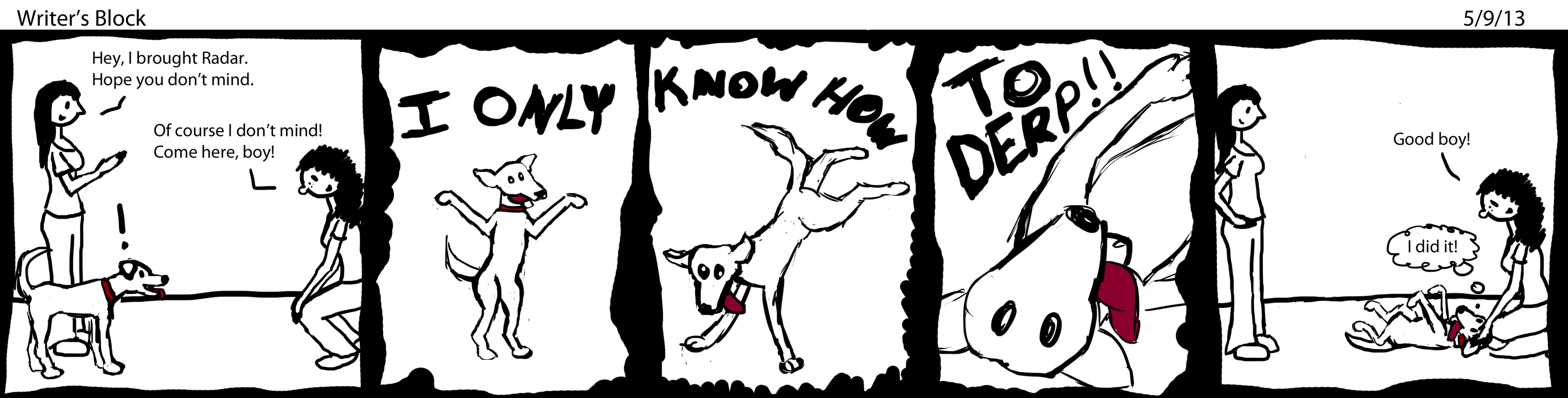
P.S. Though the owner of the dog is just a fictitious character in my comic, the dog himself is based on real-life Radar.  Here are a couple pictures:

Radar Derp Radar smile

Leave a comment

Filed under books, Comic, Humor, writing