Tag Archives: fiction

I Don’t Want Your Protagonist to Be Me

Have you ever put a book down without finishing it because you find the main character(s) insufferable? I found myself doing that with an enemies-to-lovers romance I picked up the other day, and I had to ponder for a while why I had found it so intolerable. The book switched between the two love interests for narration, starting with the female lead. (I’m not going to name the book or author in this post because there’s no need to trash an indie author, y’know? She self-published. Good for her.)

The female lead spent the first two chapters complaining about literally everything in her life. Her car. Her job. Her own inability to arrive anywhere on time. Her coworkers. Her customers. The new owner of the restaurant she works at (who happens to be her love interest). She’s just this fountain of negativity from page one.

But the thing is… she’s just like me. Cynical. Sarcastic. Negative. Grumpy. Prone to complaints.

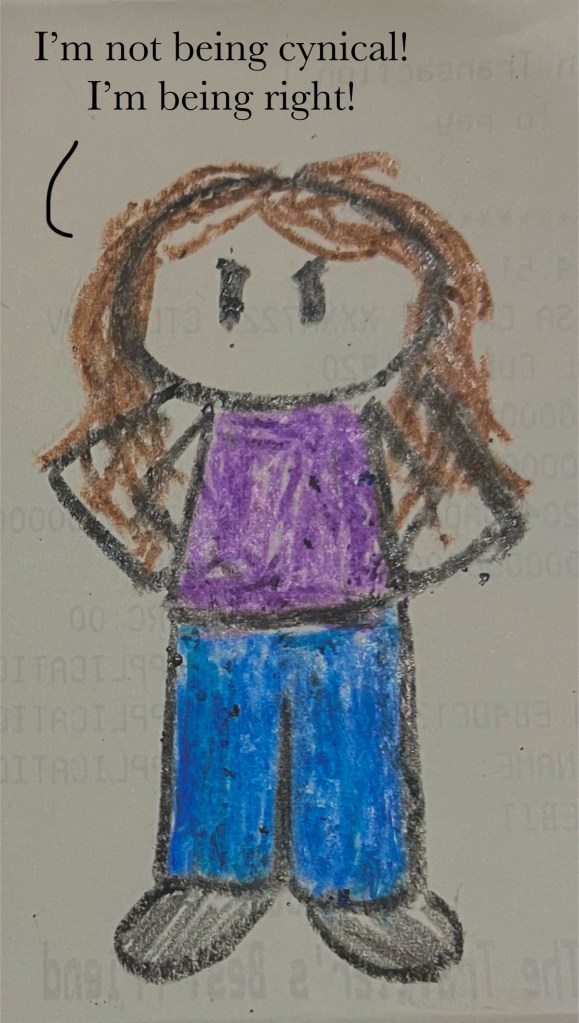
Mini Bex looking angry and saying "I'm not being cynical! I'm being right!"
I’m at the airport so I have to illustrate my blog however I can.

So why don’t I like this character? She’s just like me, so I should be able to see myself in her and relate to her, right? I’ve even had some pretty terrible experiences as a server, so this should be right up my alley.

This truly baffled me even as I put the book down, knowing I’d never pick it up again. But after a long discussion with my loving husband, I managed to weed out the truth.

I don’t want your book’s protagonist to be me. I don’t want the book to be a mirror. I don’t want to feel interchangeable with the protagonist.

I want to be friends with your protagonist.

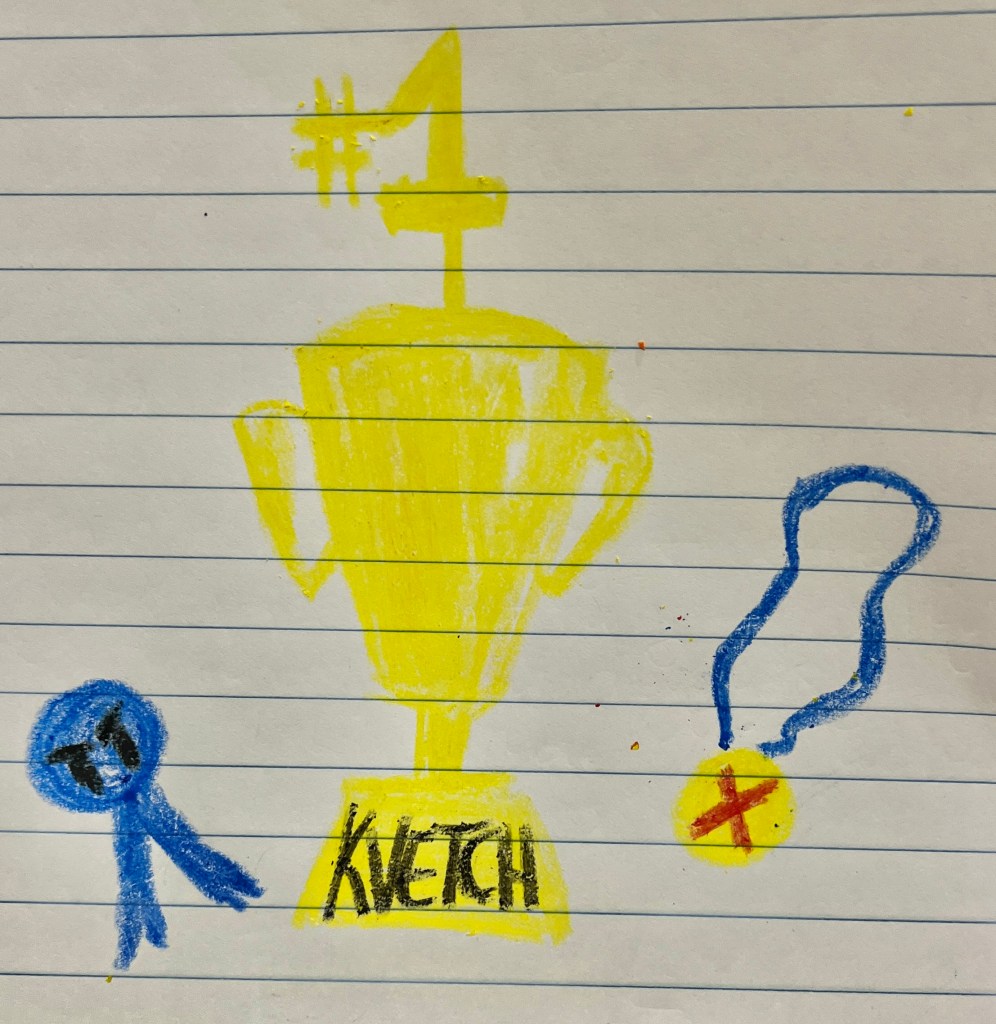
That’s the difference. It seems like not much would change. After all, many of my friends are cynical and sarcastic, too. But if I meet someone for the first time and they spend the entire time they’re around me complaining until their lips turn blue? Yeah, I probably won’t end up inviting them to grab coffee later. I don’t even complain until my lips turn blue on first meeting someone, and I’m a champion complainer. I have the awards to prove it.

A drawing of a blue ribbon, a trophy, and a medal, all dedicated to being good at complaining.

Although, the trophy could be shinier. And the blue ribbon is made out of really cheap material. Come to think of it, the awards ceremonies always go on too long. I wish they’d cut out one of the speeches. Just one. Is that too much to ask??

The fact of the matter is, it seems (emphasis on seems; I’ll never know for sure if this is true) the author of this book had some personal feelings to vent RE: working in a service industry. Those problems and complaints might be universal, but it all has to do with presentation. Many forms of media are sought out for their ability to provide some kind of catharsis. But when you’re writing fiction based in any way on your own negative experiences, you have to ask yourself: Who is this cathartic for? Me or my thousands of potential readers?

If the answer is just you, maybe some ideas need more workshopping. You have likely had negative experiences that are relatable to the masses–air travel gone wrong, serving a demanding customer at a store, Thanksgiving dinner–but just having your character lament being in one of those situations over the course of many pages does not automatically make them relatable. (And yes, at this point I have become aware of the irony going on here. I am spending this entire blog post complaining.)

I will reiterate: Your protagonist should not be a reader-surrogate. Rather, they should be someone the reader wants to be friends with. After all, what is the reader doing if not hanging out with your character(s) for dozens of pages?

The exception that proves the rule is, of course, Catcher in the Rye. (American Psycho was too obvious to use in this case. Plus, who am I to judge if you like Patrick Bateman’s style?)

I want to talk about the concept of “saving the cat,” and how all this relates to some edits I need to make to one of my own books, but I’ve already gone on too long.

Next time!

Leave a comment

Filed under books, writing

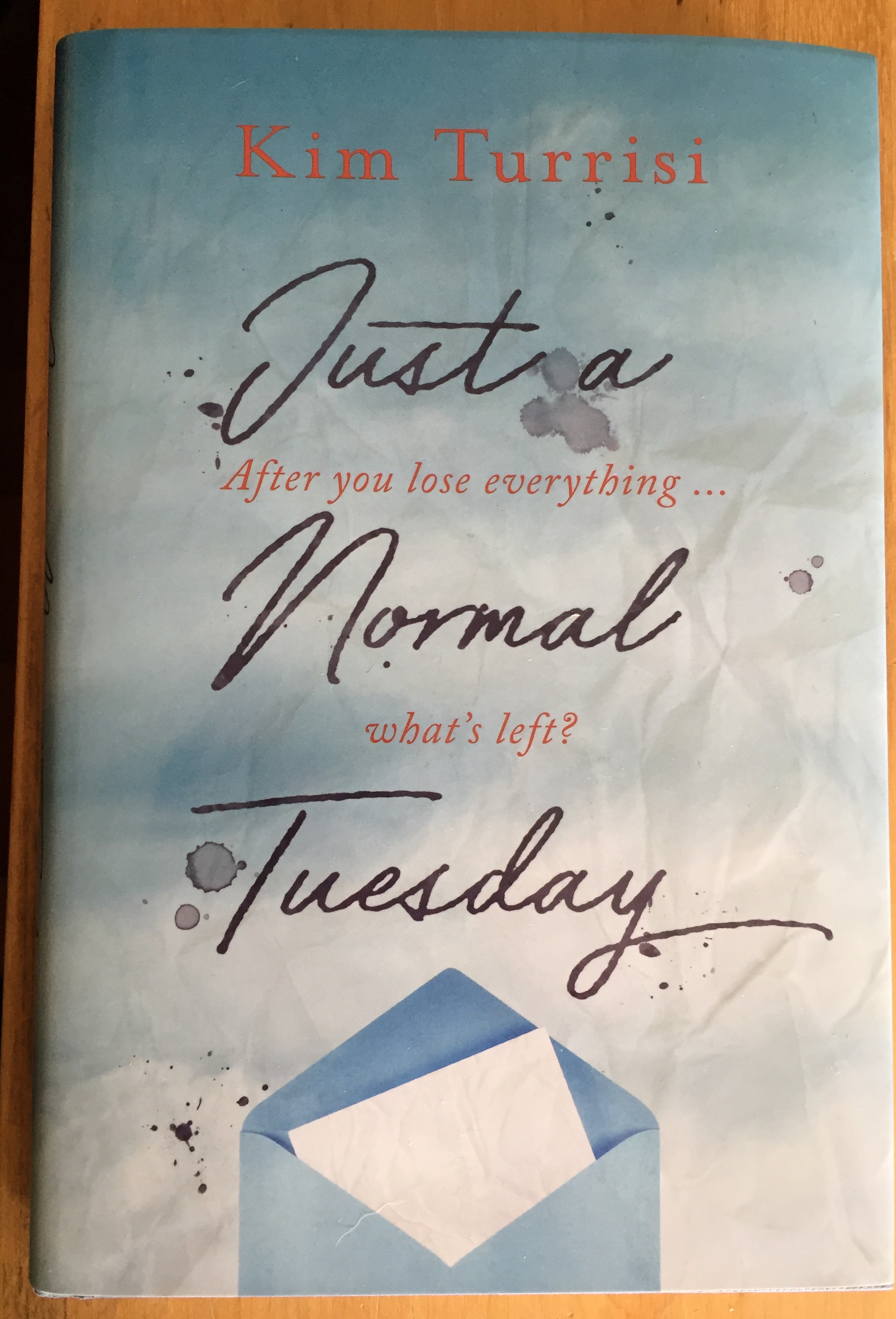
Just a Normal Tuesday, an SCBWI Book Review

Just a Normal Tuesday

Click image to go to Amazon page

I did not mean to do two books on incredibly sensitive topics in a row.  It just worked out that way.  Next time I’m definitely going to have to do Caraval, because The Impossible Knife of Memory is about PTSD.  Gotta break up the heavy topics a little.  So…

TRIGGER WARNING: SUICIDE

Book: Just a Normal Tuesday by Kim Turrisi

Genre: Young Adult, Realistic Fiction

Recommendation: I think you can tell that this is not something you pick up for a bit of light reading.  That being said, I recommend it to anyone who is interested in the topic of psychology, has experienced suicidal thoughts, or knows someone who has taken his or her own life.  This book might be the companion you need if you’re feeling all alone or trapped inside your own head.

Run-on Sentence Synopsis: Kai comes home and checks the mail to find a letter from her older sister, Jen, informing Kai and their parents that she is going to kill herself, and Kai rushes to her sister’s apartment only to find out that she is too late and what follows is Kai’s descent into depression followed by a trip to grief camp where she learns that she can find a way to live through the tragedy that struck her.

(Necessarily) Long Review: This book is a little different.  I feel that something that touches on such an important and sensitive topic merits a very careful analysis and critique.  Therefore I won’t be separating out positive and negative comments this time.

At this point I’d like to note that it is extremely difficult for me to critique Turrisi here, as this story is semi-autobiographical; when she was fifteen, her sister killed herself.  But, to be fair, I am offering critique, not criticism (slight difference in connotation there).

Firstly, if you read this book, you are going to cry.  If you have a heart at all, you will end up bawling your eyes out at some point.  This could end up being a very necessary catharsis for you.  If you have experience with suicide or suicidal thoughts, you might not even make it all the way through the book.  That being said, I feel that Turrisi laid it on a little thick at times.  Suicide is already such an emotionally impactful event that I feel you don’t really need to push to convey that impact to readers.  The times when Turrisi shined brightest were when she let genuine emotions do the talking, rather than trying to emphasize the emotional weight with repetition and figurative language.

The biggest faults are the repetition and the occasional clunky piece of dialogue.  It sometimes borders on cheesy, and there’s a bit of a pacing issue.  The cursing sometimes feels gratuitous, the title is referenced multiple times with different wording (one crazy Tuesday, just another Monday, etc.), and the words “tingle,” “tingly,” and “tingling,” were used just a few times too many for my liking.

Another thing I have to say is that the book starts out with Kai finding her sister’s suicide letter, so we don’t get to see any characterization of the sister, Jen, except through brief little snapshots that barely warrant the term “flashback.”  Similarly, we don’t really know who Kai is as a person.  Towards the end of the book she starts to realize that she’s defining herself through her relationship with her sister, and I would have liked to see the character take steps to learn more about who she is as an individual.  I appreciate beginning in medias res, but a jump backward in time after the suicide note could have helped to establish Kai and Jen as characters.  Jen’s death would have meant more to me if that had happened.  As it was, and again I hate to say this, the first half of the novel started to drag after a while.  Because the book begins with Kai at an all-time low, we don’t get to see a downward spiral.  Instead, she starts out at rock bottom, and she slowly creeps a little farther downward over numerous pages.

The grief camp part of the book, on the other hand, picks up considerably.  Possibly because Turrisi relied a little more on fabrication – since she herself never attended such a camp  – we see a slew of interesting characters, a burgeoning romance, and some truly heartfelt and gut-wrenching stories of loss and suffering.

Overall, it’s not the perfect novel, but I genuinely believe it might be helpful to those out there who are suffering from a similar loss, or who are plagued by suicidal thoughts themselves.  I think what Turrisi created is commendable to say the least, and I would recommend picking it up as long as you are prepared to be hit where it hurts.

National Suicide Prevention Hotline: 1-800-273-8255

Leave a comment

Filed under books, psychology, reading, writing

Written in the Stars, an SCBWI Book Review

Writteninthestars1

Click the picture to go to the Amazon page for the book!

As I said earlier, I didn’t make it to the autograph session, but I did run into Aisha Saeed by chance.  She is the nicest person ever.  She offered to sign my book for me when she heard I couldn’t make it later for autographs.

writteninthestars2

Boy does this book not pull its punches.  Okay, here we go with the review.

Book: Written in the Stars by Aisha Saeed

Genre: Young Adult, Realistic (Unfortunately) Fiction

Recommendation: While I definitely want everyone to buy it, I need to issue a trigger warning for abuse of any kind (emotional, physical, sexual)

Run-On Sentence Synopsis: Naila is a Pakistani-American girl on the cusp of graduating high school and going away to college where she will finally be free to date her boyfriend, Saif, whom she’s been seeing in secret because her parents have always planned to arrange her marriage, and when they (inevitably) find out about Saif they bundle up Naila and her brother, Imran, to go to Pakistan for what they say is a month but what turns out to be much longer, and Naila finds herself caught up in a forced marriage and a fight for her freedom.

Positive Feedback: As I did for George, I will describe this book in one word.  That word is “Impactful.”  I felt my gut twisting, my fingernails biting into my palms, tears in my eyes, my heart racing.  I couldn’t believe that this book was based on the reality that so many women face.  I wanted to believe it was completely fictional, with no basis in reality at all.  I wanted that so badly.  But, unfortunately, this is realistic fiction all the way.  It’s important to note that this book is not a denunciation of anyone’s culture, nor is it against arranged marriages.  Thanks to this novel, I now understand the difference between arranged marriages and forced marriages.  The latter is the one that breaks my heart, and it is the subject of the novel.  This was an expertly crafted book that had emotion and heart, but (as I said) it did not once pull its punches.  Naila’s struggle feels all too real, to the point where it was difficult for me to continue, but I felt compelled to.  I was clawing my way through, desperate to find the happy ending I was hoping would appear after all the turmoil.  And then it was there, and I felt relief wash over me.  This novel is gripping.  It doesn’t let you go, and it doesn’t go easy on you.  Truth be told, I will never reread this book; it would be too difficult.  But I am very glad that I read it, and I will cherish my signed copy always.

Constructive Criticism: My one critique has to do with Naila’s desire to stay with her boyfriend, Saif, despite her parents’ belief in arranged marriages.  The problem is that the novel begins with them already together as a couple, so there was no way for me to see a build up of their chemistry.  Naila, as the narrator, told more than showed the relationship.  I wish Saeed had taken a little more time with them at the beginning, or at least shown a couple more flashbacks than she did.  The extreme version of this issue is Stephenie Meyer saying, “I’m the author and I say these two people love each other!  You’ll believe it because I said so!” (And then I imagine she mashes the two characters’ faces together like a seven-year-old would with Barbie and Ken dolls.  Mwah Mwah Mwah!)  Saeed’s writing is way better than Meyer’s, of course, so I did believe the relationship between Naila and Saif.  What little I saw worked for sure, but if I’d gotten more chances to get used to them as a couple, their inevitable forced separation would have carried that much more weight.

I don’t know what book I’m doing next time!  I think there will be three more reviews total.  It depends on what mood I’m in and when I find time to read.  See you then!

1 Comment

Filed under books, reading, writing