Tag Archives: Young Adult

The Art of Criticism?

Since my last post, I think I figured out what inspired me to want to talk about criticism.  But I’m only 90% sure.  However, since the post has to do with a book that has “tiger” in the title, and I just so happen to have finished a tiger painting, I figured I might as well go for it.  It’s nice to get a cohesive theme going every once in a while.

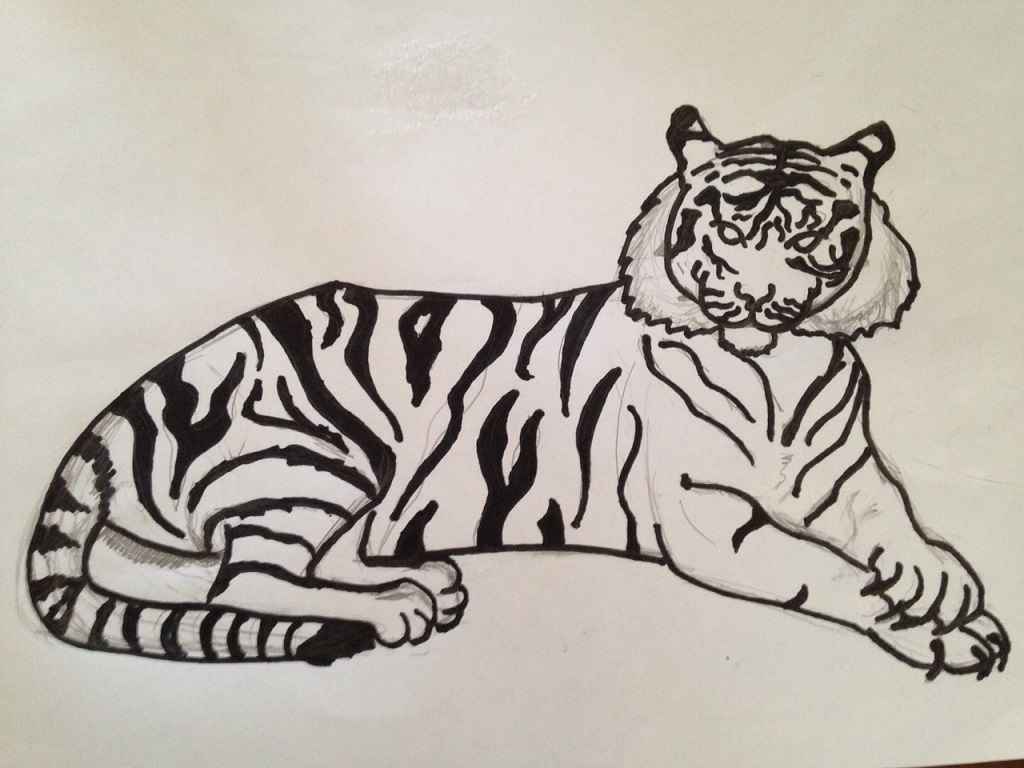
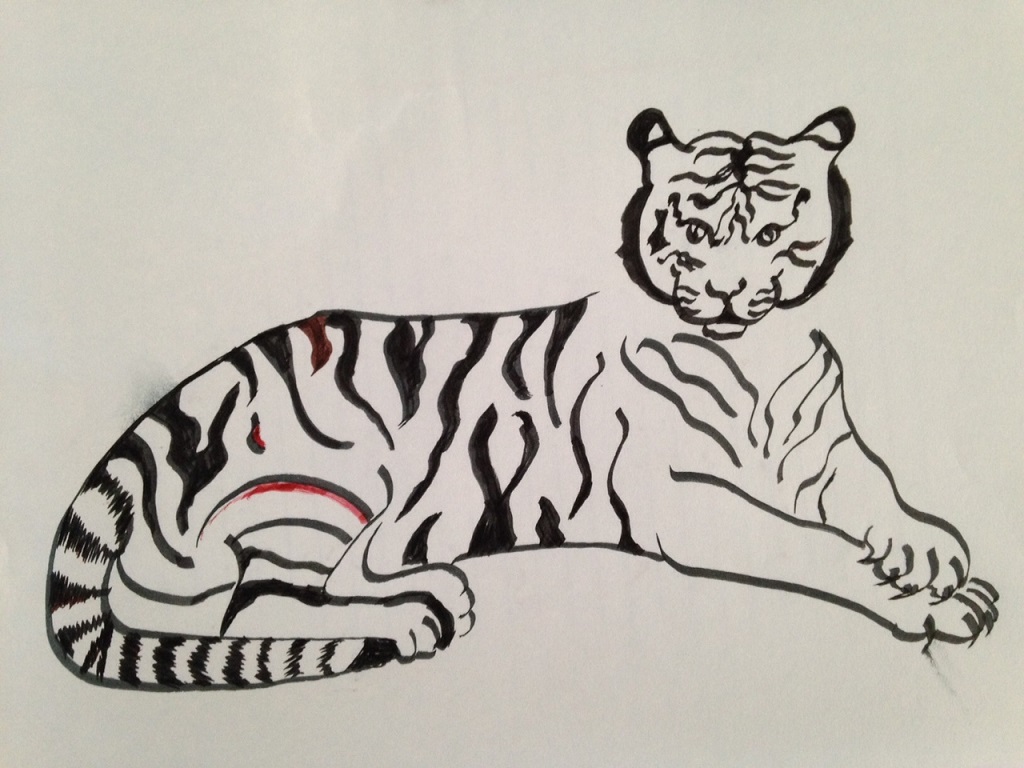
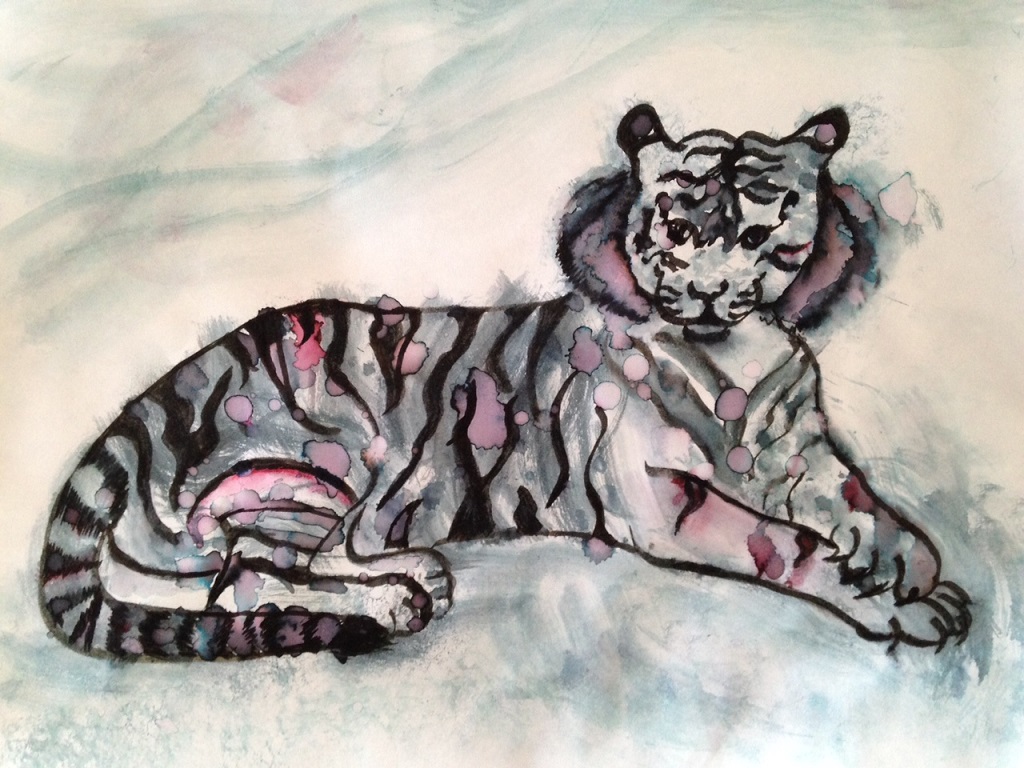
If you are unfamiliar with my latest hobby, you can click back to the post before this one.  A couple people have suggested I open an Etsy shop, but I’m not sure yet.  My last Etsy shop didn’t go over so well, but maybe this time it’ll be different?  My father requested a tiger, so I did one up for him.  Here’s the progression of the tiger from start to finish:
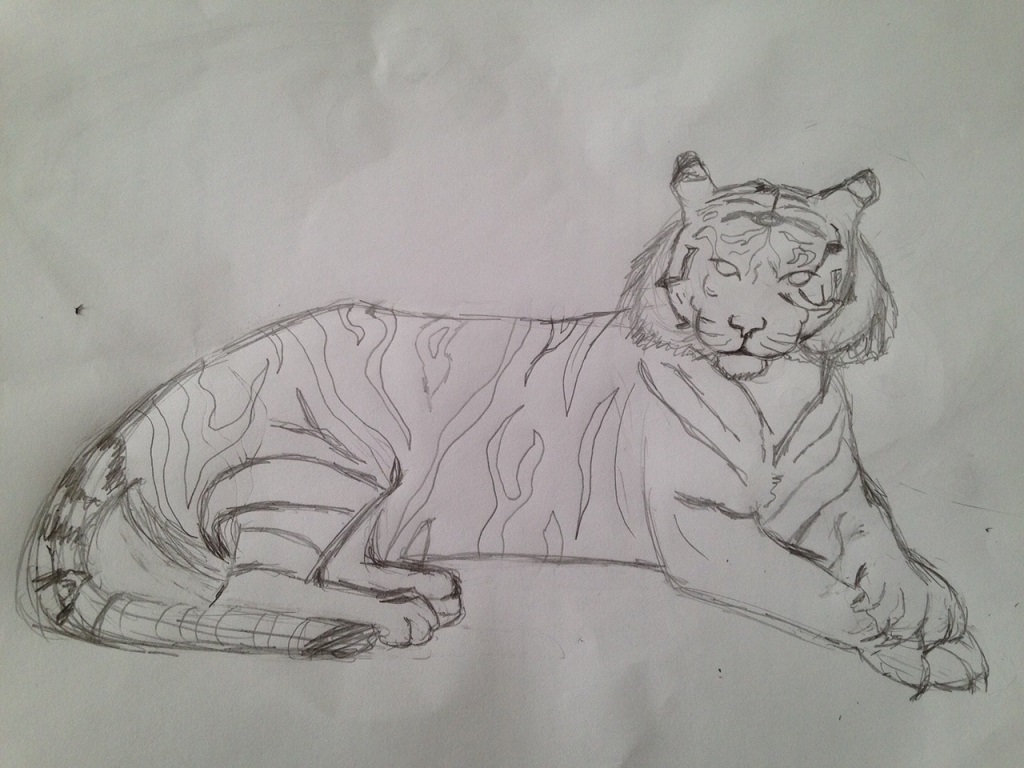
Tiger 1 Tiger 2 Tiger 3 Tiger 4

And now the book I want to talk about

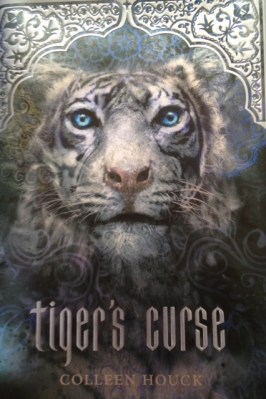
I will admit that the cover art was a big part of the reason why I bought this book.  Don't you go telling me that thing about judging books and covers.  Covers are meant to be judged.  That's the whole point of them.  You shouldn't judge people by their appearance, but books aren't going to get their feelings hurt.

I will admit that the cover art was a big part of the reason why I bought this book. Don’t you go telling me that thing about judging books and covers. Covers are meant to be judged. That’s the whole point of them. You shouldn’t judge people by their appearance, but books aren’t going to get their feelings hurt.

Tiger’s Curse by Colleen Houck.  This is an unusual review because I have to admit I only read the prologue and the first two chapters, so I’m not going to be talking about the book as a whole.  What I want to talk about (and what I think I wanted to talk about back when I started reading this book) is the importance of first impressions.

In my opinion, the first thing that a reader is going to ask when they start a book is something along the lines of “Why should I care?”  It’s been my experience as a reader that if I don’t have that question answered by the end of the first paragraph, I lose interest very quickly.  Now, that doesn’t mean that I instantly care about the characters of the books I do like, but the book offers me something in return.  It says, “You might not know why you should care yet, but I am going to give you a reason to keep reading.  I’m going to make you feel like you’re willing to find out why you should care.”  That’s why those first few paragraphs are so important.  They have to be compelling.  And Tiger’s Curse just didn’t compel me.  I was bored.

First of all, the book starts with the poem, The Tiger, by William Blake.  Not only is that ridiculously predictable, but this is not the only book that has used that poem in some way or another.  That poem is overused, in my opinion.  But that’s me nitpicking.  Let’s look at the opening paragraph, found in the prologue, which is titled “The Curse.”

The prisoner stood with his hands tied in front of him, tired, beaten, and filthy but with a proud back befitting his royal Indian heritage.  His captor, Lokesh, looked on haughtily from a lavishly carved, gilded throne.  Tall, white pillars stood like sentinels around the room.  Not a whisper of a jungle breeze moved across the sheer draperies.  All the prisoner could hear was the steady clinking of Lokesh’s jeweled rings against the side of the golden chair.  Lokesh looked down, eyes narrowed into contemptuous, triumphant slits.

So here’s my impression: I’m clearly supposed to care about the prisoner, but I don’t get his name.  Instead I get his captor’s name.  I don’t care about his captor’s name.  If the prisoner’s name is meant to be kept a mystery, that’s fine.  Don’t even give me the captor’s name then.  It’s not like that name means anything to me at this point in the story.

Second, look at all that excessive description!  I don’t care at all about the room they’re standing in.  I want to care about the prisoner, but I’m too distracted by the decor surrounding him to be able to.  The opening line alone is weighed down with globs of exposition that serve to inform, but not intrigue.  Don’t inform me about stuff until you’ve given me a reason to care about said stuff, okay?  There are way too many adjectives and adverbs.  Pillars tend to be tall.  You don’t have to point that out.  And I challenge you to narrow your eyes in a way that is both contemptuous and triumphant.  In my imagination, those two expressions are vastly different.  Plus we already know that he’s looking down “haughtily” so it makes “contemptuous” redundant.  And the fact that the throne is gold is mentioned twice!

Here’s how I would write it:

The prisoner stood with his hands tied in front of him, his stance proud despite his fatigue and the beatings he’d taken.  His captor looked on from a lavish, gilded throne, his eyes narrowed into contemptuous slits.  Immense pillars stood like sentinels around the room.  Not even a whisper of a jungle breeze interrupted the pervasive stillness.  All the prisoner could hear were his captor’s rings clinking steadily against the side of the throne.

So when do we find out the prisoner’s name?  That he has “royal Indian heritage”?  What his captor’s name is?  What his relationship to his captor is?  Well, this book is 403 pages long, so take your pick.  That information can come out anywhere, anytime.  In fact, the very next paragraph starts with “The prisoner was the prince of an Indian kingdom called Mujulaain.”  So why was it necessary for the first sentence to include any of that information?

In conclusion: What is the art of criticism?  Criticism should not be used to put someone down.  “Criticize” and “Insult” should not be used synonymously.  The former should be used for a purpose.  Critical analysis should lead to the betterment of the work.  And I guess I wanted to make that clear because I think a lot of people take and/or give criticism personally, myself included sometimes.  I’m not immune.

From as objective a standpoint as I can offer, this book starts out poorly.  And it is for that reason that I stopped after two chapters, and probably why I will not try to finish it.  It’s apparent that this book needed some more editing.  As you can see from this lengthy blog post, I’m not one to keep things brief.  But this is a more casual setting.  In novels every word must count, and you must make sure you do not overstuff your book with excess fluff.  Start out with “Why should my readers care?” and work your way out from there.

Books are meant to be about imagination.  It’s okay to use some description, but you shouldn’t be leading your reader around by the nose either.  “The pillow was small, soft, and pink, and it was hand-embroidered with an image of two koi fish by an elderly Japanese woman back in 1972.”  It’s too much!  Let your reader decide what a soft, hand-embroidered pillow would look like, okay?

I acknowledge that there are more factors that go into enticing and captivating a reader, but I think what I have just addressed is one of the biggest pieces of the puzzle.

That’s all for now!

Leave a comment

Filed under books, Humor, writing

A Simple Little Flow Chart

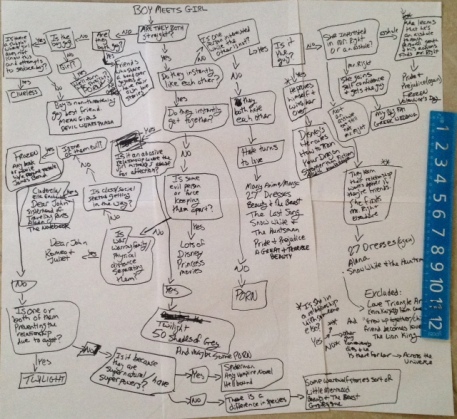
I was thinking a lot recently about cliches and how hard it is to avoid them.  Romantic cliches are particularly tricky.  In order to illustrate this, I decided to create a nice, little flow chart that explores some (but not all) of the common romantic plot lines that can be found in books and movies.

You’re gonna want to click on that image to make it bigger, obviously.  Don’t worry — it’ll open in a new tab.  You should also be able to click on it once it’s open in a new tab to zoom it in even more.  I think you’ll be happier with it then.  Have fun!

Boy-Meets-Girl-Flowchart

Please note the disclaimer in red in the lower left corner.  I just couldn’t cover everything.  This process was exhausting enough as it was.  Hell, the computerized version wasn’t even my first draft.  I did it all on paper first.

See?

I threw my ruler on there for a size reference.  I had no banana for scale.  (Very few people are going to get that reference, I fear)

I threw my ruler on there for a size reference. I had no banana for scale. (Very few people are going to get that reference, I fear)

But the reason I did this was to show you that avoiding cliches is hard, and you shouldn’t be expected to do it perfectly.  That’s why I talk about taking a cliche and making it your own.  At this point there aren’t many more options.  You’ll note I didn’t really have examples for the “They’re both gay” storyline.  That could use some exploring.  And, of course, my own novels — Hellbound, Grotesque, and The Dreamcatchers — can be found in there.  Because I am not above these cliches at all.  I just try to make them as fresh as possible.  You will also note that many titles appeared multiple times.  That just serves to further illustrate how complicated something as seemingly simple as a relationship between two people can get.  It might also help you to develop some ideas for your own characters and stories, I hope.  Try exploring multiple story arcs at once, or turning a cliche on its head.

Also I did not include the following story line for what I hope are obvious reasons.

Boy and Girl Meet —-> They do not develop a relationship —-> They never see each other again

In a story, if you bring up two people meeting, it has to be relevant somehow.  So….yeah.

I want to talk a little bit about the art of criticism next, so that’ll be coming up.

Ta ta for now!

Leave a comment

Filed under books, Humor, writing

Free Sample

Welp, I finished editing Grotesque.  Before you go about congratulating me, I want to define “finished” for you:

Finished [ƒǝƞ-œŒ- ñÿď] adj – At a point where a book can be sent out for initial critique, where the book meets at least two of the following three criteria: 1. Is legible  2. Is in a language that all or most of the readers know  3. Obeys some rules of grammar

So yeah.  It’s not done.  Not by a long shot.  So I want you to keep in mind that the small sample I’m about to provide is completely unedited.  It will definitely change at least once before the month is out.  I can guarantee that.

But that’s okay!  Because all I really wanted to show you was some of the ways the book has already changed.  So I’m going to take a risk and compare the old and new introductory passages (which is only a risk because I am not sure at this point if my beta readers are going to like the new intro at all), as well as one other excerpt taken from the end of Chapter One.

For those who need a bit of a refresher on Grotesque, you can click here to go through my favorite post about it.  Or you can click here to go to the post in which I describe my inspiration for it (and then apparently provide the entirety of the first chapter, but you don’t have to read that).  Or you can go really crazy and click on both those links.

Okay, so here we go.  I’m going to put all passages in blockquotes so that they’re easy to differentiate from like…this writing I’m doing right here.

Pre-rewrite intro:

I awaken for the first time on the ledge of a tall building, the ground too far below for comfort. Above me is an inky black sky full of bright stars, a large moon, and a few wisps of gray cloud. The words for these things come easily to me, in a language that floods my mind, though I don’t know where it came from.

New intro:

Cold

Falling

Gasping

Breathing

In

Out

Flailing

Grabbing

Holding

Balance

Nerves tingling.

Heart pounding.

Stuttering breaths, in and out.

What am I doing?

A cold breeze dries the sweat on my forehead.

Where am I?

Sitting on a ledge, gripping onto something to keep myself steady, beneath an inky black sky dotted with stars. The moon is bright, illuminating a few wisps of gray cloud, and the ground beneath me which is too far away for comfort.

So why’d I change it?  Well, the first intro honestly wasn’t very captivating.  It also felt kind of forced and clunky to me.  With the new introduction, I wanted to try to encapsulate what it really would feel like to suddenly be alive for the very first time ever.  Once again, not sure if my readers (i.e. close friends and family) are going to like it.  It might change.  But this illustrates the direction I wanted to take it in pretty well.

Next we’ll look at a little further down in the same chapter.  This is from the old version:

“I brought life to you because I need some help.”

“Doing what?”

He shrugs.

“This and that. I have rather ambitious plans for my future, and I knew I wouldn’t be able to accomplish my goals without help. So I risked weakening my powers some in order to give you life.”

“What if I don’t want to help you?”

“Oh, you can’t refuse. You’re enslaved to my will. You will have to obey any and every command I issue to you.”

He is so matter-of-fact about it, but I find I am not nearly as calm. I feel anger and frustration rising in my gut as the meaning of his words sinks in.

“So you brought me to life just to use me as a slave?”

“Yes.”

“I think I’d prefer to be a statue…or free.”

The man snorts out a laugh.

“And what would you do with your freedom? Do you really think people would accept you into their homes? Into their lives? You’d be hunted down and slaughtered on sight.”

I feel my throat tighten, cutting off further words. He is right, of course. This had all been part of his plan to keep me under his control.

“Besides,” he continues. “You can’t be free. Not until I’m dead. And don’t get any ideas. You cannot disobey me.”

Well, this is a solution to one problem at least. I raise my hand and slash my claws across the man’s throat. His blood spills quickly, and he collapses to the floor. The bastard hadn’t ordered me not to kill him, so I wasn’t disobeying anything by doing so.

And this is that same scene from the new version:

He shrugs. “This and that. I have rather ambitious plans for my future, and I knew I wouldn’t be able to accomplish my goals without help. So I risked weakening my powers some in order to give you life.”

“Why should I help you?” I ask, genuinely curious.

“Because I’m going to tell you to,” is the reply. “You can’t refuse. You are bound by my will, and will continue to be until such time as I meet my inevitable, but unfortunate end.”

“So you created me to be your…slave?”

Slave. The word whispers itself in my ear, its significance bubbling in my mind. Bad. Not free. Trapped. Suffering.

I am pretty sure I don’t want to be a slave.

“Don’t look so concerned,” the man says, chuckling. “You will be happy to serve me. Your only purpose in life will be to please me. You will see that everything I do is for a greater cause.”

At first his words don’t seem all that reassuring, but suddenly I can see his point. What’s so wrong with being a slave? I’ve been promised security. And this man hasn’t given me reason to believe he has bad intentions. Surely this will be a good thing. I can’t wait for his next order so that I can show him how obedient I can be.

I smile.

Hopefully you can see how different this scene has become.  Thanks to my friend Micah’s suggestions, I added a new layer to Serrafiel’s character arc by forcing him to be happy with his position in life, rather than giving him a sense of morals right off the bat.  If he were truly new to life, he wouldn’t immediately know what was right or wrong.  He’d be like a two-year-old.  And that made his arc more interesting (in my humble opinion).  Because he has to grow up very, very fast.

Also, because I just realized that not everyone will read the name with the Spanish pronunciation, Serrafiel is not pronounced “Sarah-feel.”  It is pronounced “Seh-ra-fee-EL.”  That’s the best I can do for a pronunciation guide.  In case you didn’t notice when you were reading earlier, I’m not so good with the symbols and such.

And that’s it for now!  Hope you like the sneak peek at the changes I made.

Lots of words for you to read today, huh?  How about I reward you with…

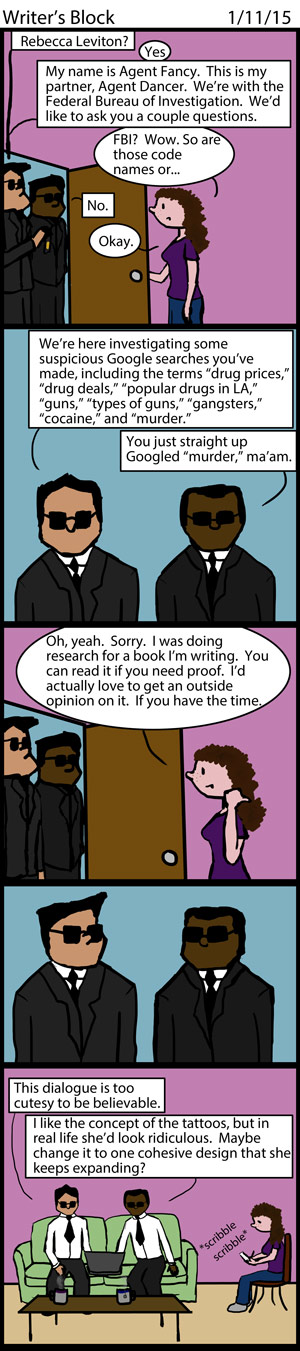
A NEW COMIC!!

Writer's-Block-Strip-44

2 Comments

Filed under books, Comic, Humor, writing