Tag Archives: novels

Not Special Enough

I wrote this book recently. It’s called Falling for the Protagonist. I had a great time writing it. The premise is that a woman gets transported into a romance novel and sends the male protagonist spiraling into an existential crisis when he realizes he’s a book character. It’s funny but emotional (Big ups to me for making myself cry at one point during a reread!), satirical of the romance genre but also an homage to it. I’m quite proud of it. I’ll copy and paste the first few paragraphs at the bottom of this post for those who are interested.

I’ve been querying this book. Got a couple rejections. No big. Except for this one that stuck out to me. Short but sweet, it said:

Hello Bex,

Thank you so much for sending your materials for our review. We really enjoyed this and can see the potential in your writing.

Unfortunately, however, despite all that we liked, we didn’t quite fall in love with this as we had hoped, so we will not be offering representation at this time.

Now, don’t get me wrong. A response–any response–from an agency is a good thing. There are many who say that you just have to wait six to eight weeks and if you don’t hear from them, that’s a rejection. The ambiguity and the… I suppose anticlimax of it… can be frustrating. Not that I blame them one bit. Can you imagine taking the time to send out what must be hundreds of rejection emails every week? No thank you. I’m just saying, when I get a negative response, I appreciate it.

But being me, I started to close-read this thing a little. What it boils down to is: Your writing is great. We don’t like it anyway. (Yes, I’m putting words in their mouth. My writing might have come across to them as merely good or adequate, but allow me the paraphrase here for the sake of my ego.)

I’ve contended with this frustration for many years. I’m not saying I think they should have accepted my book. Quite the opposite, actually. There are some people who write back or get angry or try to argue with these agents (I know; I used to intern for one). And all I want to ask them is: Do you really want someone representing your work who feels anything less than enthusiastic about it? How are they going to sell it to others if they can’t even sell it to themselves?

This also ties into the age-old question that agents and editors get asked time and time again: What do you look for in a book? I understand why people ask this question as they’re hoping to get an edge on how to find representation, but it’s unfortunately just not possible to answer as this industry is entirely subjective. The usual answer is something along the lines of, “I need a really strong voice.” This translates to what I see as a universal truth:

Sometimes I pick up a book and I like it. Sometimes I pick up a book and I don’t like it.

Happens to me all the time. I’ll start reading something and the writing will be perfectly sound, but it doesn’t “grab me” as they say. And I can’t always put my finger on why. The truth is, an agent (or editor) has to pick up your book and feel the click. No click, no contract. They can’t say “I didn’t like your book, but I don’t know why” because writers would riot. But that’s the gist.

This all brings me back to the aforementioned frustration I’ve been contending with. I think my writing is good. Some of my books are better than others, and I always have room for growth, but I’ve crafted some solid stories. I believe my writing is special and unique. The problem is, and I’ve just started to wrap my head around this, everyone is special and unique. It’s true! You are unique! But in a world that celebrates only a select few special people, that only works if everyone else fails to be recognized for their specialness. There would be no Many to worship the Few otherwise. There are thousands of good writers out there who will never get a publishing contract, actors worthy of every award in the book who will never see a stage or the front end of a camera, singers with voices like angels who won’t get a recording contract. You get it.

I know there is a very good chance that I will never see my work published (the traditional way). It’s just the way it goes. I’m special. I believe that. But I’m not special enough. LEST YOU THINK I AM GOING TO END THIS POST ON A MAJOR DOWNER…

It’s not my job to be the motivational poster on your wall. I’d suck at it anyway. Although… I did make this one.
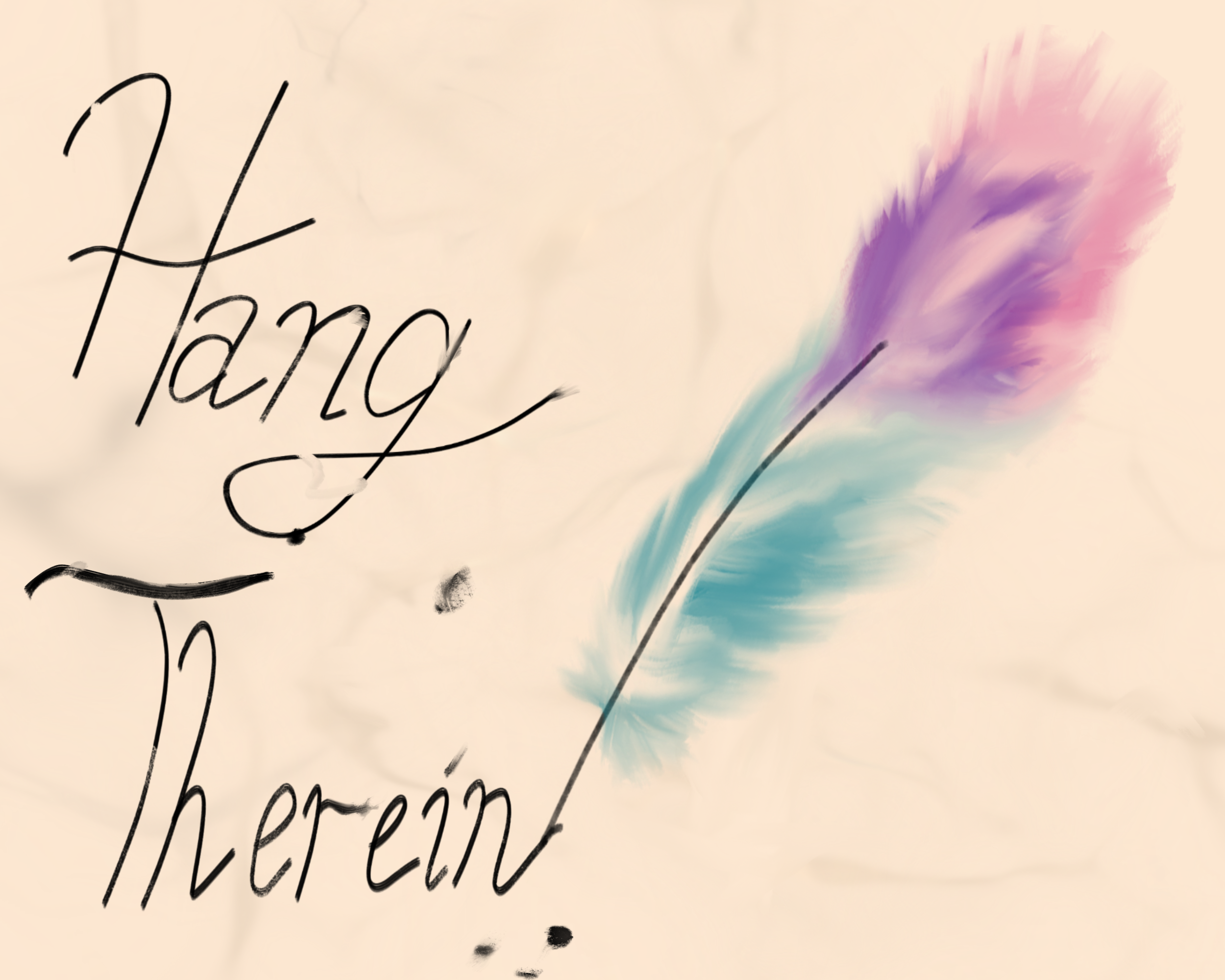
But only because I thought it was funny!

The point is, I see no harm in trying again and again. If I lost track of Why (with a capital W) I write (i.e. because I enjoy it), that would be the real downer. As long as I’m writing, and I don’t see myself stopping, why not query? Why not put myself out there? A thousand rejections hurt, but I firmly believe you miss 100% of the shots you don’t take. So go for it. If you don’t believe in your own specialness, how can anyone else?

Huh. I guess I became a motivation poster anyway.

Here’s a teaser of Falling for the Protagonist:

Chapter One

The back corner of the bar known as Bonne Nuit echoed with the jovial, slightly manic, titters and squeals that could only belong to a group of women who were two hours into a bachelorette party. Emmy Miura kept smiling as the feminine chaos surrounded her and tried to tamp down on the deep, heartfelt longing she felt for her comfy pants. They were at home all alone, probably missing her. She couldn’t remember the last time she’d left them for so long on a Saturday night. Trying not to sulk, she shifted around until the strapless cocktail dress she’d bought for the occasion—at her sister’s subtle insistence—settled a little more comfortably around her.

“Deep breaths,” her best friend of a million years, Sarah, murmured to her.

“I am a bad person for wanting to leave.”

“You are a good sister for staying.”

That was one way to look at it, and Emmy did enjoy seeing May’s happiness, which was flowing more readily than the happy hour specials. Her sister, adorned with a sparkling headband that was coated in curlicues of metallic ribbon, was leaning over to listen to one of her friends. Whatever the friend said lit up May’s face.

“Yes!” she cried. “Yes, absolutely. I have to tell the story. I don’t even care if everyone’s already heard it a million times. Emmy, cover your ears.”

Emmy immediately went on alert. “Why?”

“Because I’m going to tell—shh seriously, guys, this is good—I’m going to tell the story of how me and Luis met. Emmy hates this because she is a cynic and a nonbeliever, but I’m telling it anyway because it is my party!”

“Oh Jesus.”

“How did they meet?” Sarah asked.

“She went to a sex psychic,” Emmy muttered under her breath.

“Sorry. Run that by me one more time?”

Emmy gestured to her sister, indicating Sarah should listen to May, and repeated, “She went to a sex psychic.”

1 Comment

Filed under writing

The Art of Criticism?

Since my last post, I think I figured out what inspired me to want to talk about criticism.  But I’m only 90% sure.  However, since the post has to do with a book that has “tiger” in the title, and I just so happen to have finished a tiger painting, I figured I might as well go for it.  It’s nice to get a cohesive theme going every once in a while.

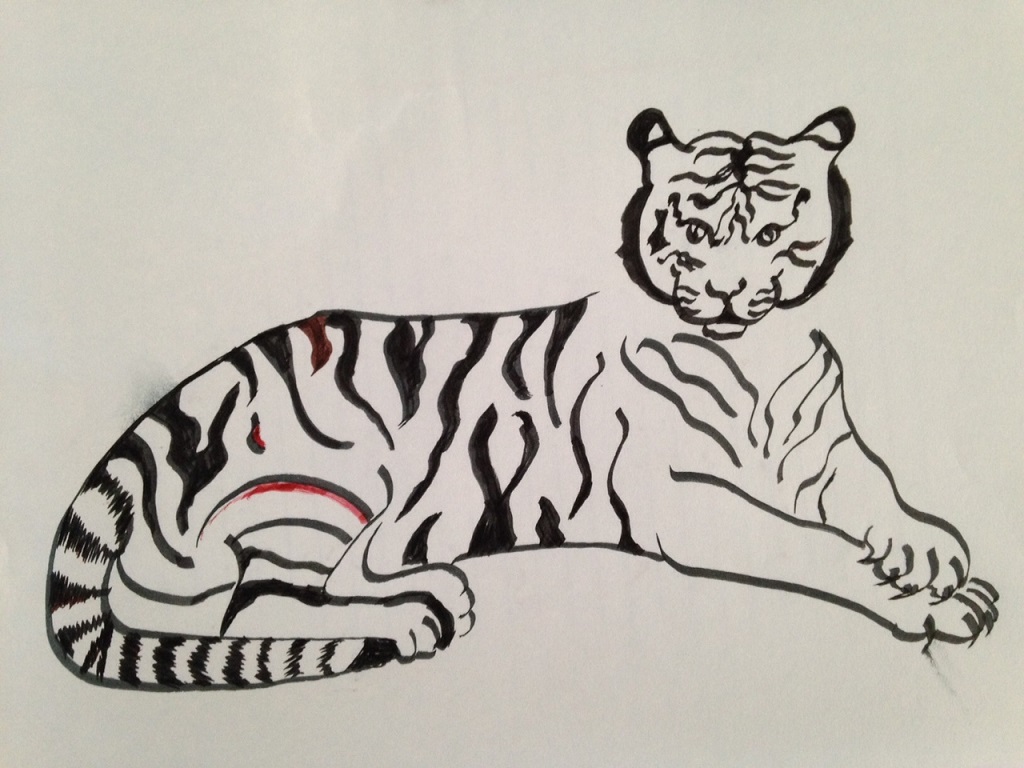
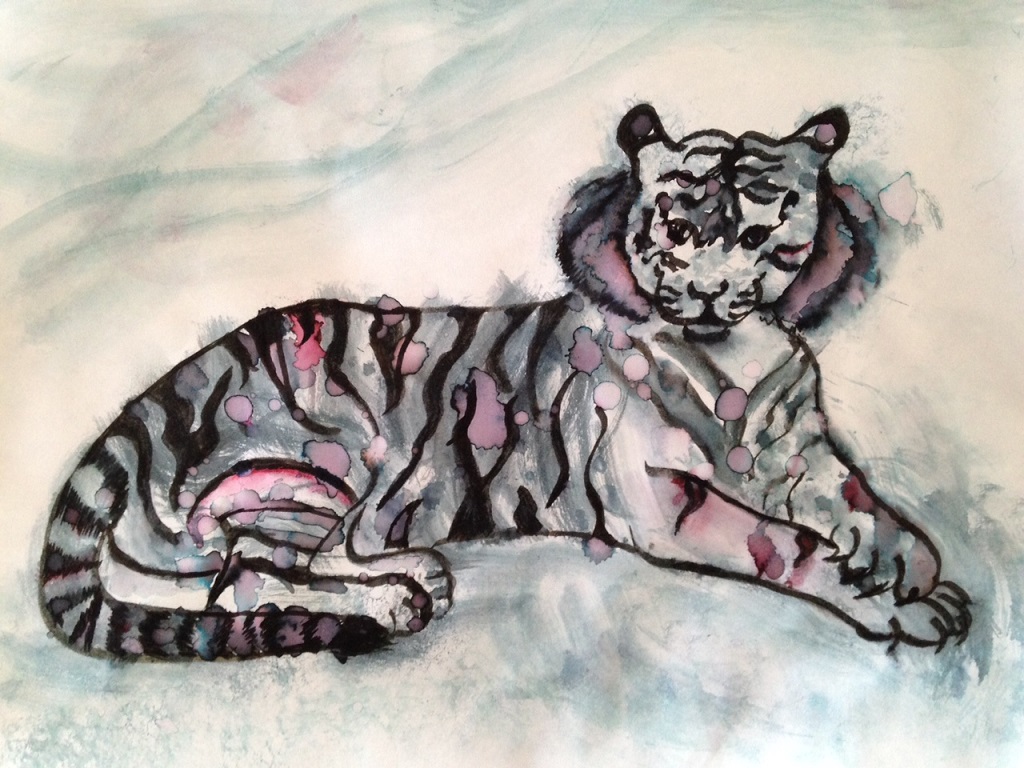
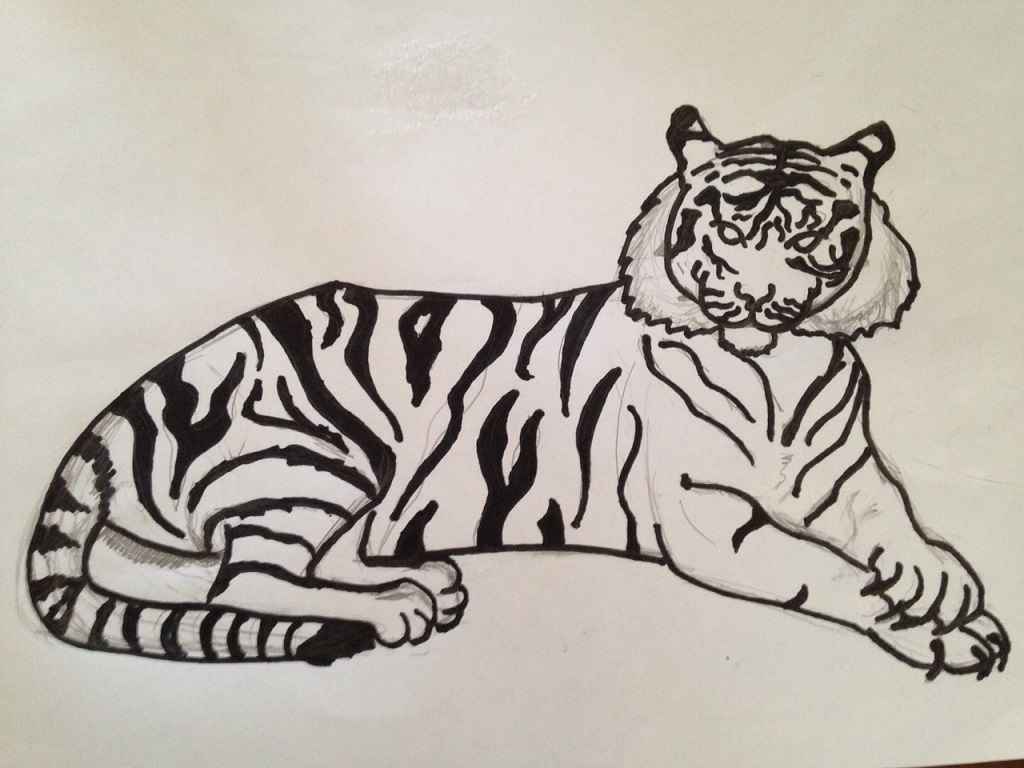
If you are unfamiliar with my latest hobby, you can click back to the post before this one.  A couple people have suggested I open an Etsy shop, but I’m not sure yet.  My last Etsy shop didn’t go over so well, but maybe this time it’ll be different?  My father requested a tiger, so I did one up for him.  Here’s the progression of the tiger from start to finish:

Tiger 1 Tiger 2 Tiger 3 Tiger 4

And now the book I want to talk about

I will admit that the cover art was a big part of the reason why I bought this book.  Don't you go telling me that thing about judging books and covers.  Covers are meant to be judged.  That's the whole point of them.  You shouldn't judge people by their appearance, but books aren't going to get their feelings hurt.

I will admit that the cover art was a big part of the reason why I bought this book. Don’t you go telling me that thing about judging books and covers. Covers are meant to be judged. That’s the whole point of them. You shouldn’t judge people by their appearance, but books aren’t going to get their feelings hurt.

Tiger’s Curse by Colleen Houck.  This is an unusual review because I have to admit I only read the prologue and the first two chapters, so I’m not going to be talking about the book as a whole.  What I want to talk about (and what I think I wanted to talk about back when I started reading this book) is the importance of first impressions.

In my opinion, the first thing that a reader is going to ask when they start a book is something along the lines of “Why should I care?”  It’s been my experience as a reader that if I don’t have that question answered by the end of the first paragraph, I lose interest very quickly.  Now, that doesn’t mean that I instantly care about the characters of the books I do like, but the book offers me something in return.  It says, “You might not know why you should care yet, but I am going to give you a reason to keep reading.  I’m going to make you feel like you’re willing to find out why you should care.”  That’s why those first few paragraphs are so important.  They have to be compelling.  And Tiger’s Curse just didn’t compel me.  I was bored.

First of all, the book starts with the poem, The Tiger, by William Blake.  Not only is that ridiculously predictable, but this is not the only book that has used that poem in some way or another.  That poem is overused, in my opinion.  But that’s me nitpicking.  Let’s look at the opening paragraph, found in the prologue, which is titled “The Curse.”

The prisoner stood with his hands tied in front of him, tired, beaten, and filthy but with a proud back befitting his royal Indian heritage.  His captor, Lokesh, looked on haughtily from a lavishly carved, gilded throne.  Tall, white pillars stood like sentinels around the room.  Not a whisper of a jungle breeze moved across the sheer draperies.  All the prisoner could hear was the steady clinking of Lokesh’s jeweled rings against the side of the golden chair.  Lokesh looked down, eyes narrowed into contemptuous, triumphant slits.

So here’s my impression: I’m clearly supposed to care about the prisoner, but I don’t get his name.  Instead I get his captor’s name.  I don’t care about his captor’s name.  If the prisoner’s name is meant to be kept a mystery, that’s fine.  Don’t even give me the captor’s name then.  It’s not like that name means anything to me at this point in the story.

Second, look at all that excessive description!  I don’t care at all about the room they’re standing in.  I want to care about the prisoner, but I’m too distracted by the decor surrounding him to be able to.  The opening line alone is weighed down with globs of exposition that serve to inform, but not intrigue.  Don’t inform me about stuff until you’ve given me a reason to care about said stuff, okay?  There are way too many adjectives and adverbs.  Pillars tend to be tall.  You don’t have to point that out.  And I challenge you to narrow your eyes in a way that is both contemptuous and triumphant.  In my imagination, those two expressions are vastly different.  Plus we already know that he’s looking down “haughtily” so it makes “contemptuous” redundant.  And the fact that the throne is gold is mentioned twice!

Here’s how I would write it:

The prisoner stood with his hands tied in front of him, his stance proud despite his fatigue and the beatings he’d taken.  His captor looked on from a lavish, gilded throne, his eyes narrowed into contemptuous slits.  Immense pillars stood like sentinels around the room.  Not even a whisper of a jungle breeze interrupted the pervasive stillness.  All the prisoner could hear were his captor’s rings clinking steadily against the side of the throne.

So when do we find out the prisoner’s name?  That he has “royal Indian heritage”?  What his captor’s name is?  What his relationship to his captor is?  Well, this book is 403 pages long, so take your pick.  That information can come out anywhere, anytime.  In fact, the very next paragraph starts with “The prisoner was the prince of an Indian kingdom called Mujulaain.”  So why was it necessary for the first sentence to include any of that information?

In conclusion: What is the art of criticism?  Criticism should not be used to put someone down.  “Criticize” and “Insult” should not be used synonymously.  The former should be used for a purpose.  Critical analysis should lead to the betterment of the work.  And I guess I wanted to make that clear because I think a lot of people take and/or give criticism personally, myself included sometimes.  I’m not immune.

From as objective a standpoint as I can offer, this book starts out poorly.  And it is for that reason that I stopped after two chapters, and probably why I will not try to finish it.  It’s apparent that this book needed some more editing.  As you can see from this lengthy blog post, I’m not one to keep things brief.  But this is a more casual setting.  In novels every word must count, and you must make sure you do not overstuff your book with excess fluff.  Start out with “Why should my readers care?” and work your way out from there.

Books are meant to be about imagination.  It’s okay to use some description, but you shouldn’t be leading your reader around by the nose either.  “The pillow was small, soft, and pink, and it was hand-embroidered with an image of two koi fish by an elderly Japanese woman back in 1972.”  It’s too much!  Let your reader decide what a soft, hand-embroidered pillow would look like, okay?

I acknowledge that there are more factors that go into enticing and captivating a reader, but I think what I have just addressed is one of the biggest pieces of the puzzle.

That’s all for now!

Leave a comment

Filed under books, Humor, writing